
Category: History, Heritage and Conservation
-
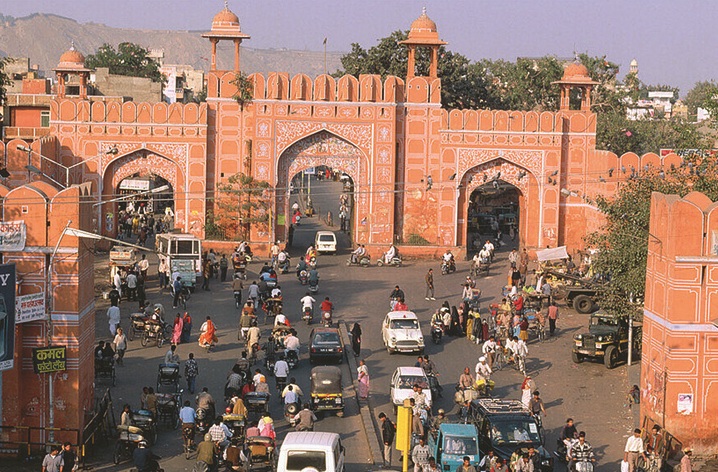
Integrating Creative Culture Clusters and Urban Development: Jaipur
The study explores how integrating creative cultural clusters into urban development can support heritage conservation, socio-economic revitalization, and sustainable urban growth while responding to contemporary challenges.
-

Infrastructure as an Ecosystem
This research challenges the traditional, technocratic view of infrastructure, typically treated as disconnected systems like transportation, utilities, and buildings, evaluated purely through metrics of efficiency and productivity. Such fragmented approaches fail to acknowledge the intricate, socially embedded realities that make urban life meaningful.
-
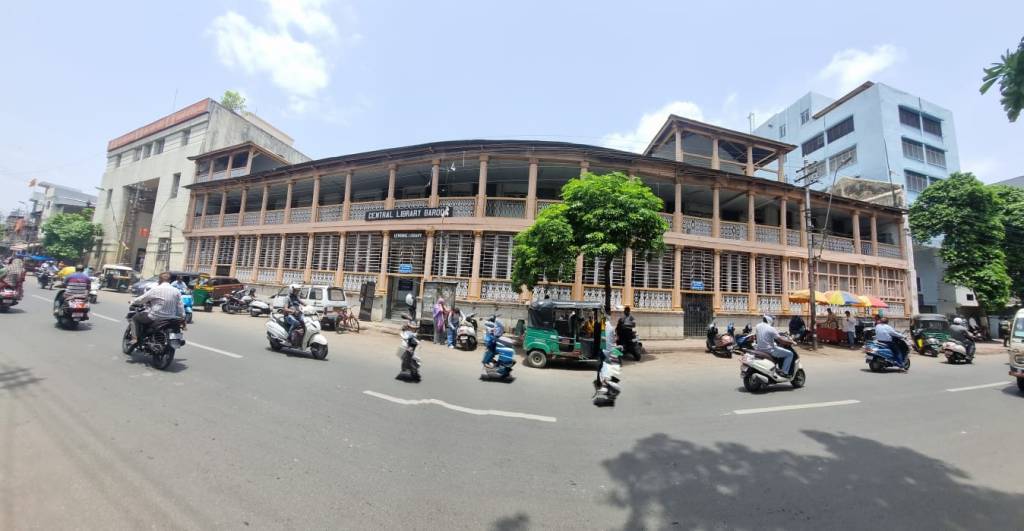
Vadodara Central Library: Edwin Lutyens
The library is a poignant representation of the role of architecture in the formation of social values and promotes community identity in a world of rapid change
-

Arrival City: Kozhikode
The city of Kozhikode (Calicut) has history dated back to 7th century with subsequent arrival of traders from various part of the world. The city has rich mix of people with diverse religions group and wealth of eclectic architectural heritage.
-

Cultural Territories: Case of Nashik
Cultural Territories are tangible and intangible forces that underpin historic networked conditions and forms valuable relationship along with diverse historic & contemporary circumstances.
-

Historic Cities | Imagining Past as Future: A Case of Ahmednagar
The thesis intends to understand the extent and interrelation of the historic layers expressed through historic buildings and monuments with their extended environment and urban form by analyzing the role and status of Heritage
-
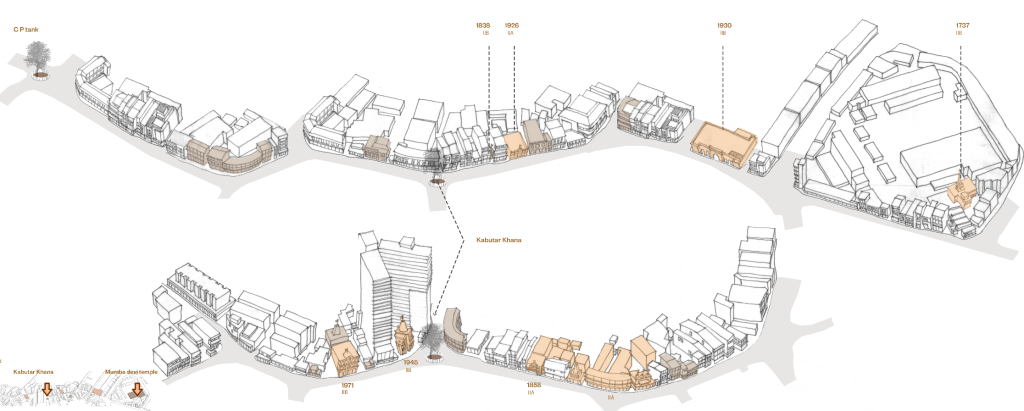
Cultural Resilience of Urban Form:
The thesis tries to establish the need to Retain, Repair, Reuse or Redevelop historic built forms by categorizing them into high-resilient and low-resilient zones to avoid the homogeneity of urban form in the historic native town of Mumbai.
-

Heritage at the interface of nature and culture. An integrated approach for development of Kuttanad region
The study intents to investigate the existing proposal, interventions, and issues around the degradation of the system and provide solutions understanding the values and perceptions associated with the community and the changing aspirations and conflicts emerged amongst them.
-

Resilience & Southern Urbanism | Towards a New Paradigm
Resilience as a construct has myriad connotations. This book attempts to understand resilience embedded in the particularities of the urbanisms in Indian cities. We take them as representatives of Southern urbanism, chosen carefully from the vast heterogeneous and diverse cultural geographies of the country.
-
![[Re]-Thinking the Cultural Integrities of a Historic Urban Center](https://betweenarchitectureandurbanism.com/wp-content/uploads/2022/06/10.jpg?w=1024)
[Re]-Thinking the Cultural Integrities of a Historic Urban Center
This thesis intends to examine the workability of dynamic concept of cultural integrities which can precisely cover the larger context of the cultural dimension in sustainable development of a city.
-

Re-Integrating Derelict Waterways -A Case of Kollam Canal, Kerala
Water and its management within ecosystems have always been the most crucial aspect of any settlement. Water flow has been modified and diverted to create hydraulic systems for meeting the energy, commerce and food requirements of the society.
-

Urban Coalescence: Employing the BGI model as a contemporary resolve for the socio-ecological concerns
A vivid reminder of how today’s world came to be the way it is, when industry employed entire communities and provided the heartbeat for many towns and cities. In this respect these historic industrial landscapes deserve our closest attention.
-

Opportunities in historic core of pilgrim towns: case of PandharpuR
Thesis intended to study the association of user (local, pilgrim and tourist) with the built environment and natural environment of the historic core for a holistic approach to conserve the historic core with all its physical and dynamic structural attributes, dealing specifically with the case of historic town of Pandharpur, Solapur
-

Understanding the Notion of Social Spaces within Market Streets
Streets are the crucial part of cities, and with mixed-used pursuits, they become dynamic yet enigmatic. These pursuits speculate a celebration on the streets, creating a thread of character and culture for the city.
-

Strengthening Spatial Dimensions of Landscape and Culture: Case of Nashik, Maharashtra
The thesis aims to study the relationship between human, nature and culture through folklores and mythologies to understand their influence on the spatial organisation of the historic city of Nashik to develop an appropriate strategy for conservation linked to urban development to retain the landscape of various values.
-
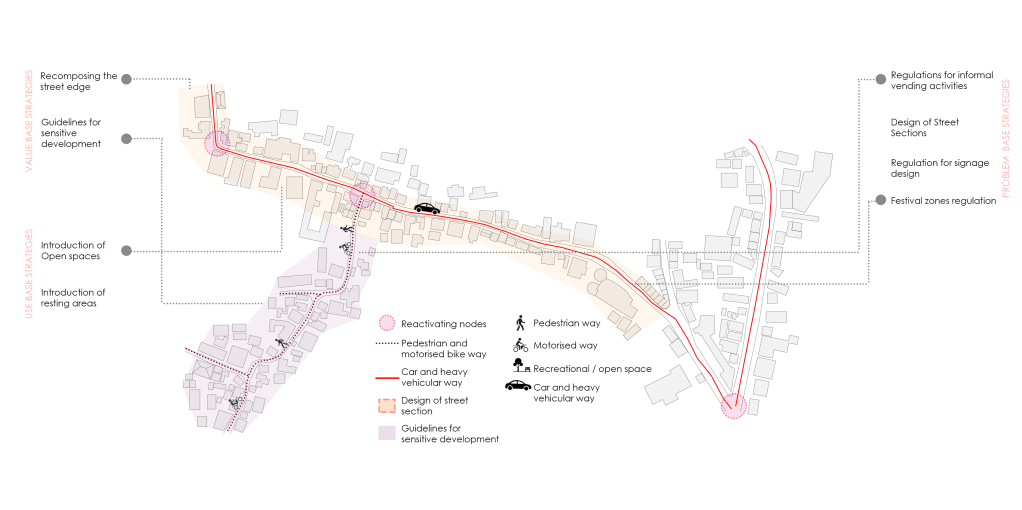
Community Regeneration through Urban Form of streets – A case of Kalyan
The main aim is to understand the importance of streets as centers of social, commercial and physical interface of different activities on a daily basis. The theories of everyday urbanism, life between the buildings talk about streets as important places of communication.
-
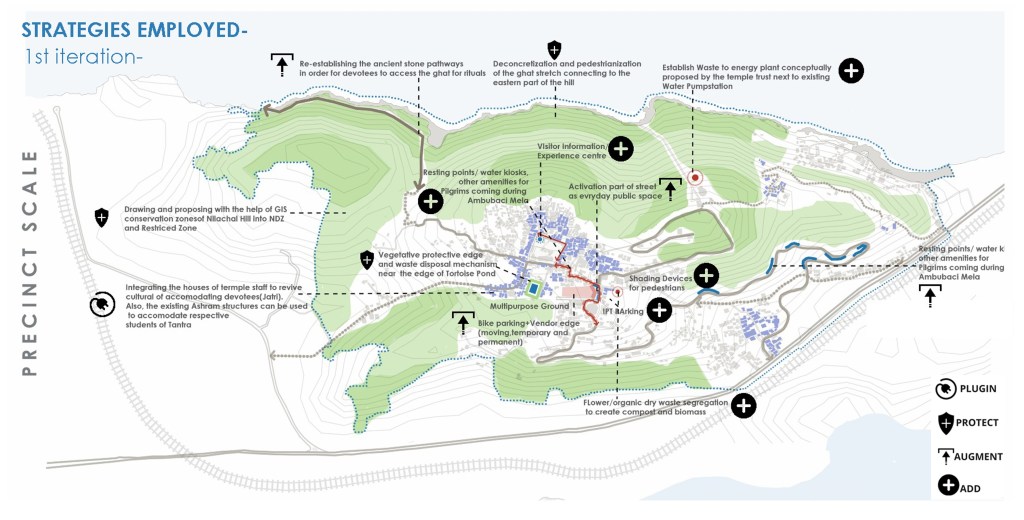
Sacred Spaces : electronics places
Historic Religious cities preserve their identity within them in certain parts called ‘religious precincts’. They have functions that still are embedded in the logic of religious rituals and mythological narratives. They are somewhat of a ‘Palimpsest’ and the newest layer superimposed on them is that of the digital realm. As an effect, this has shifted…
-

Shaping identity of Tier-Two City through collective memory
The thesis aims to use collective memory as a medium for tier two cities to draw out the nuanced forms of place identity and set a framework to enable development integrated with conservation practice in the historic urban environments .This thesis looks to form a framework that would highlight the uniqueness and peculiarities as crucial…
-
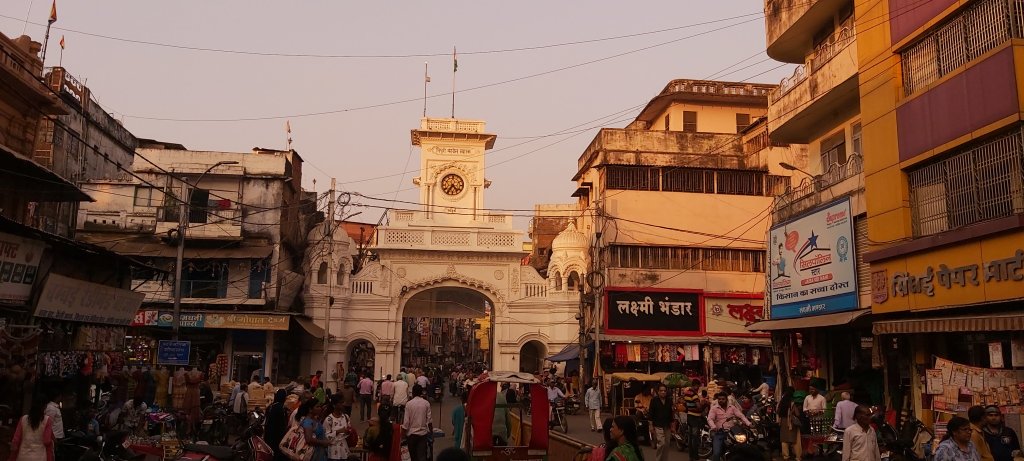
Cultural Quarters as Mechanisms for Urban Regeneration
This blog reviews the concept of cultural quarters as an approach towards urban regeneration. This is a scholarly work of John Montgomery, who is an urban and city regional planner, specializing in the economy, culture and the design of cities.
-
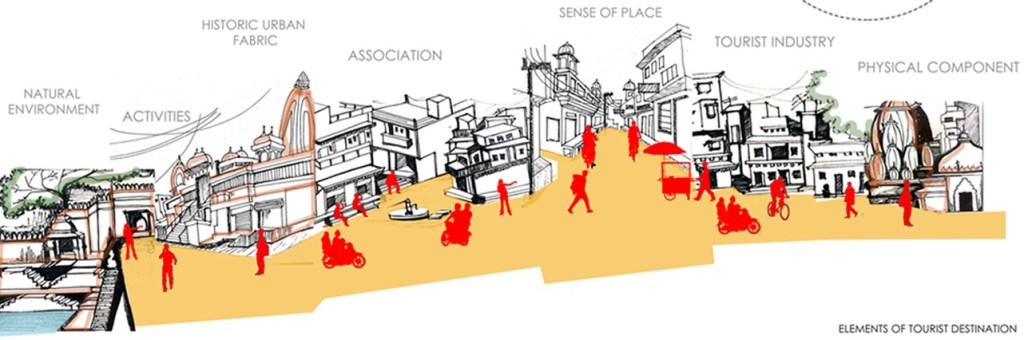
Conservation Management Plan for Mass Tourism: Historic Core of Udaipur
Increased leisure time and changes in lifestyle and consumption patterns have given renewed importance to tourism that either can encourage the preservation and maintenance of the cultural heritage or can be the reason for growing challenges in terms of impacting the relationship of the environment with the built, the significance of the destination and the…
-
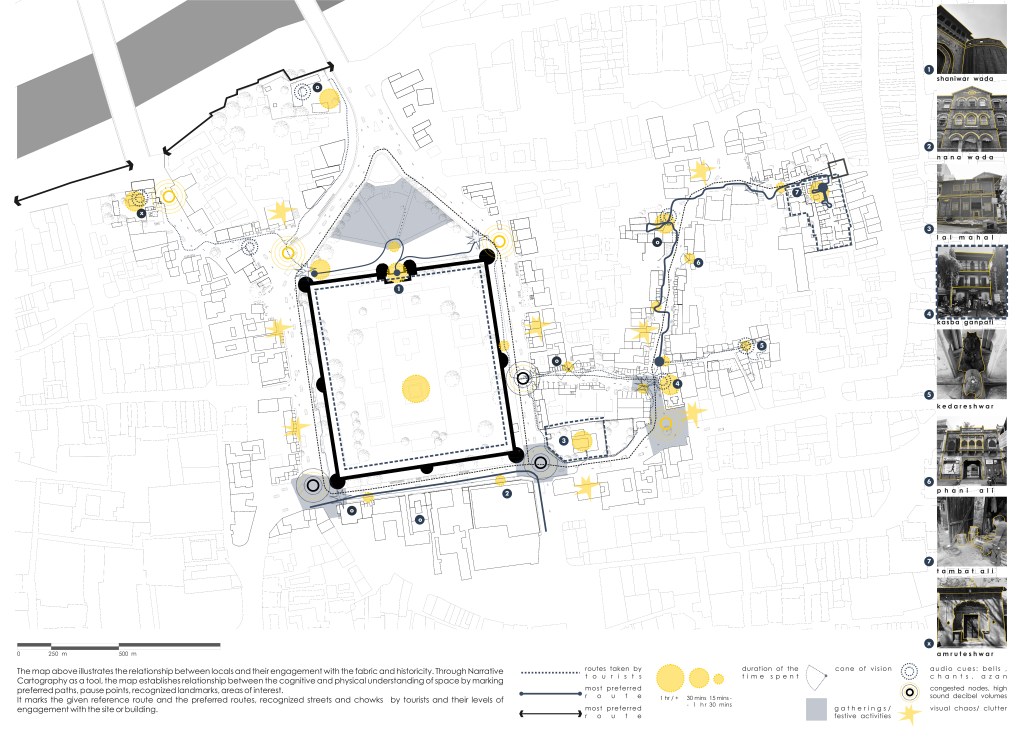
Developing a Conservation Framework for the Historic Core through Phenomenology: Pune
he current development practices governed by logics and codes fail to address this kinetic layer of experience, human associations and engagements; the salient aspects of phenomenological approach, thereby resulting in disjunction of people with their surroundings and razing the ethos of the historic cores.
-

Managing the Impacts of a Temporary Pilgrim Event: A Case of Alandi- Pandharpur Waari.
Indian cities are in constant motion. They are composed of different layers. One form is everyday and other is temporary. There are many cultural, religious events which are temporary in nature, taking place periodically around the cities.
-
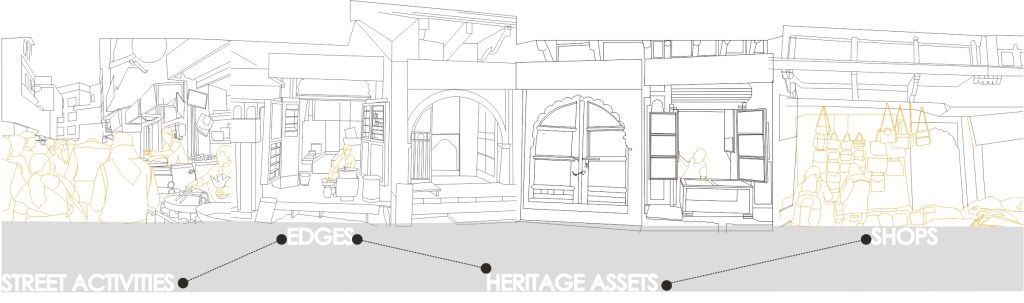
Conservation of Streets-Reaffirming Sense of Place: Mathura.
This study dissects the anatomy of Streets that provide varying experience to the users through different modes, interaction through multiple activities, communication, movement pattern and a place for conversation for the people.
-
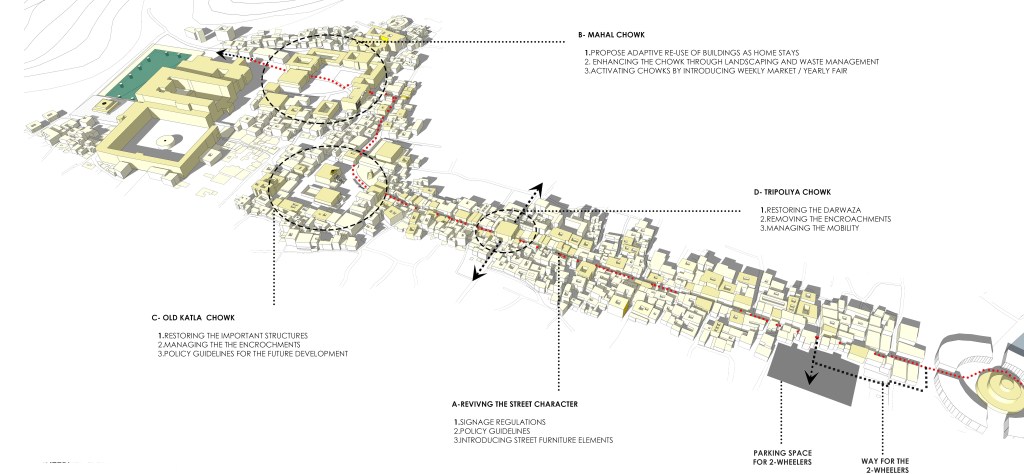
Reviving the Historic Core Through Community Spaces: A Case of Alwar
The research aims at examining the issues and challenges faced by the historic core and investigate and understand the reason why the local-community of historic core is moving to the suburbs. The aim of the thesis is revival of the historic core through community based approach.
-

Gender conscious approach towards conservation of “Shaktipeethas”, Places of Female Divine: A case of Mahur
Author: Chandan Jain | Krvia – Post Graduate Program | 2020 In India there is contradiction between patriarchy system and the traditional veneration of goddess for her sovereignty. There are diverse and conflicting views available on the position of females in religious texts, starting from feminine leadership as the uppermost goddess, to limiting her role…
-

Conservation and Up-gradation of the Transforming Economic – Infrastructural Linkages in the Historic Core of Pune City
Urban Transit connections through history and territorial identity are important for establishing ‘place specialization’ in a rapidly urbanizing and global city. Identity of a place becomes an important aspect in planning process and continues to look into conserving more buildings in order to retain the collective character and memory of places
-
MODERN HERITAGE AND CONTEMPORARY INDIA
In a country like India, the paradigm of development takes place in various forms, with entangled complexity and enmeshed priorities. The emphasis on development always supersedes considerations of historical aspects. The peculiarities of geography and the very act of conservation of historical events, acts, narratives and artifacts are often thought of as an academia and not…
-
THE MOVING ICONOGRAPHY: PANDHARPUR
Architecture and Urbanism of pilgrimage cities are complex and constantly transforming by forces that shaped religious beliefs and customs. They are complex due to its sacred geography, religious significance or mythological values, while they are constantly emerging/ transforming due to their increasing significance in context of socio-politico-economic subservience. This duality is often difficult to deconstruct…
-
RESTORATION OF SARDAR PATEL HOUSE: BARDOLI
The field of conservation is often elite and niche practice, it often trapped into the conversation of what is contextual history and what is fabricated context. This perhaps leads to conflicting nature of practices and resultant outcome of such wanted desirable are questionable. The conservation is also often linked with colonial architecture and less of indigenous architecture and typologies. The recent…
-
RE-CONSERVATION: KREMS, AUSTRIA
The town of Krems along the Danube Valley is an important historical town, which has witnessed the consistence architectural sustenance across the centuries. The old town of Krems offers high quality of Urban and Architectural landscape spreaded across the river Danube. The town has two parts, showing excellent quality of architectural monument and experiential urban…
-
CHAMPANER: THE ABANDONED CAPITAL
The city of Champaner, historically was seized by several ruler due to its scenic backdrop and architectural importance. The history of establishment of regime dates back to 7th century A.D and subsequent & constant change of regime from 14th century A.D to 17th century A.D. The rule of Chavda Dynasty, Begda Dynasty, Mughul Dynasty and…
-
UNKNOWN MONUMENTS: GWALIOR
The tomb of master Muhammad Ghaus lies near the central market and visibly close to the Gwalior fort. The magnificent architecture is not easily accessible or visible. The Muhammad Ghaus was master composer during Mughal times. The architecture of mausoleum is typologically different from many tomb structures of Maghul times. It demonstrates the various architectural influences of…
-
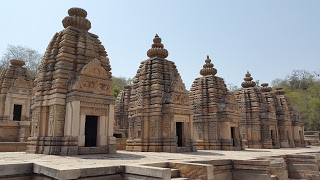
BATESARA: ARCHAEOLOGICAL SITE
The site is approximately 30 minutes drive from city center and has approachable road. The excavation site is on hill, sloping towards west, hence the sun casts deep shadows and illuminating the temple complex almost through out the day.
-
SCHOOL OF ARCHITECTURE BUILDING: BARODA
The School of Architecture building at M.S. University, Baroda is more than 100 year old building. The main component of construction is brick load bearing, stone lintels/ ties & wooden boarding on wooden section as floor. The architectural style seems mixed of colonial typology, Gothic arches, Mogul domes/ entrance, central large courtyard with corridor around.…
-
CONSERVATIVE CONSERVATION
A lot has been said on conservation especially world has turned this discipline into a fashionable and niche-able commodity of past. This is perhaps true in urban forms of traditional Indian Cities. The traditional urban architecture and its conservation broadly divided into three broad categories: Ideology of Conservation, Practice of Conservation and Technology that need to be employed. Architecture…
-
MINIMUM (RITUAL) CITY
The city arrives through stark landscape of mountain range from distance and large reservoir. The stark landscape of rock formation makes city fabric far more humble and humane. The entire city is walk-able and it maintains its minimum infrastructure. The formation of bazaar within its main spine is distinguishable form many other similar ritual cities. The recent development of new, generic building types &…
-
HOUSE IN CALICUT
HOUSE IN CALICUT This is an ancestral house of family built 160 years ago. It is located in subdued corner of the city, making it almost inaccessible and invisible. The house is built in laterite stone (Chira) which is a typical characteristic of konkan, karwar & kerala region. The house plan has distinct three layers,…
-
STEP WELLS
The ancient scripture on architecture prescribes the symbiotic relation of water and buildings & the imagination of such (non) building type always historically preoccupied with presence of shrine prominence. The profound belief of symbiotic relation of water and nature found its resolution in architecture in various part of India namely temple and kund. Perhaps the ritual significance…
-
MANDU: THE CONDITION OF UNLEARNING
There are some visits that being premeditated and some being left to be imagined trips. The visit to Mandu has always been of later type. The visit to Mandu has been most sought out destination after my graduation since 1990. It’s an invigorating occurrence when imagined place collapses in to quintessential time. The usual departure…
-
UNKNOWN STRUGGLE
Perhaps South India had no Voltaire or Montesquieu to interpret political phenomenon in terms of pure reason. But the feeling of nationalism and patriotism was never second to any foreign country. The greatest political thinker of South India then was Maruda Pandyan a rebel leader of the Sivaganga. His concerns were revolved around: – Obstructive…
-
BALLARD ESTATE
Fine urban design excersize carried out in 1914-18, housing port offices. The photographs are taken from top floor of our interior site.

