

Aim & Objective
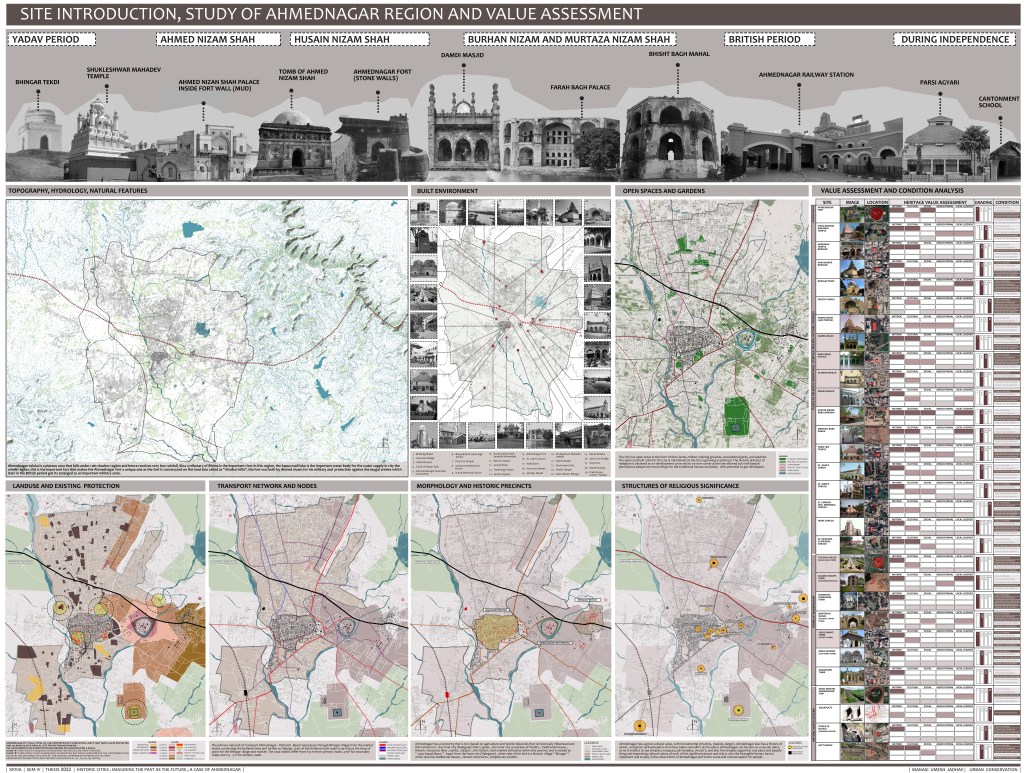
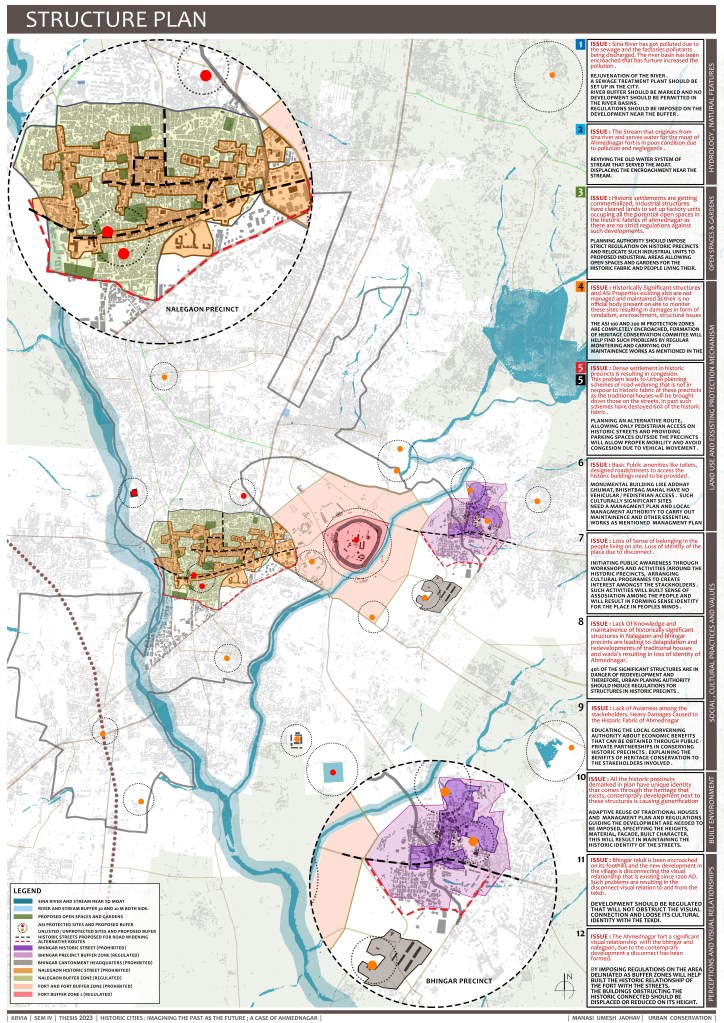
The thesis intends to understand the extent and interrelation of the historic layers expressed through historic buildings and monuments with their extended environment and urban form by analyzing the role and status of Heritage; although Heritage forms an integral part of the city, it is challenging to locate and identify the historic fabric due to the city’s contemporary urban growth, this phenomenon is due to the fact that Heritage is often observed as an isolated object within the urban process, which fails to explain its role and significance in the contemporary period. Such an approach leads to restricting Heritage to an object and failing to establish its extent in a wider context, leading to management based upon isolated imagination. Therefore, this thesis attempts to establish Ahmednagar as Historic Urban Landscape that expresses its significance in a broader context through understanding the vulnerabilities of Urban Heritage and opportunities for a Heritage sensitive future.
Keywords: Historic fabric, Historic Urban Landscape, Urban Heritage, Integrated approach, Identity.
Interventions
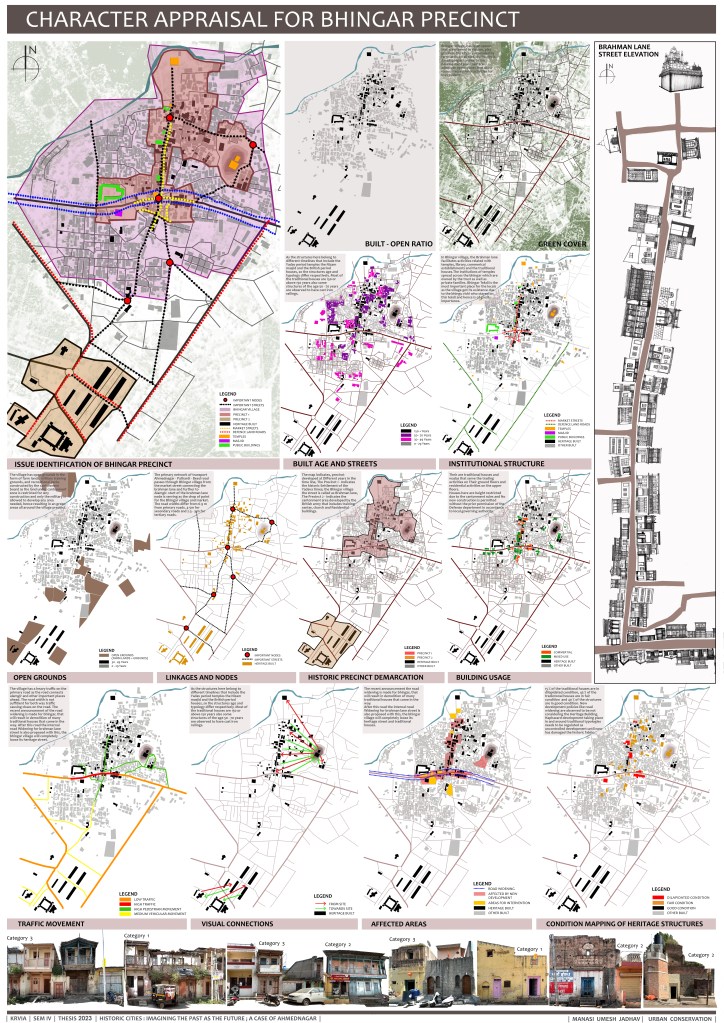
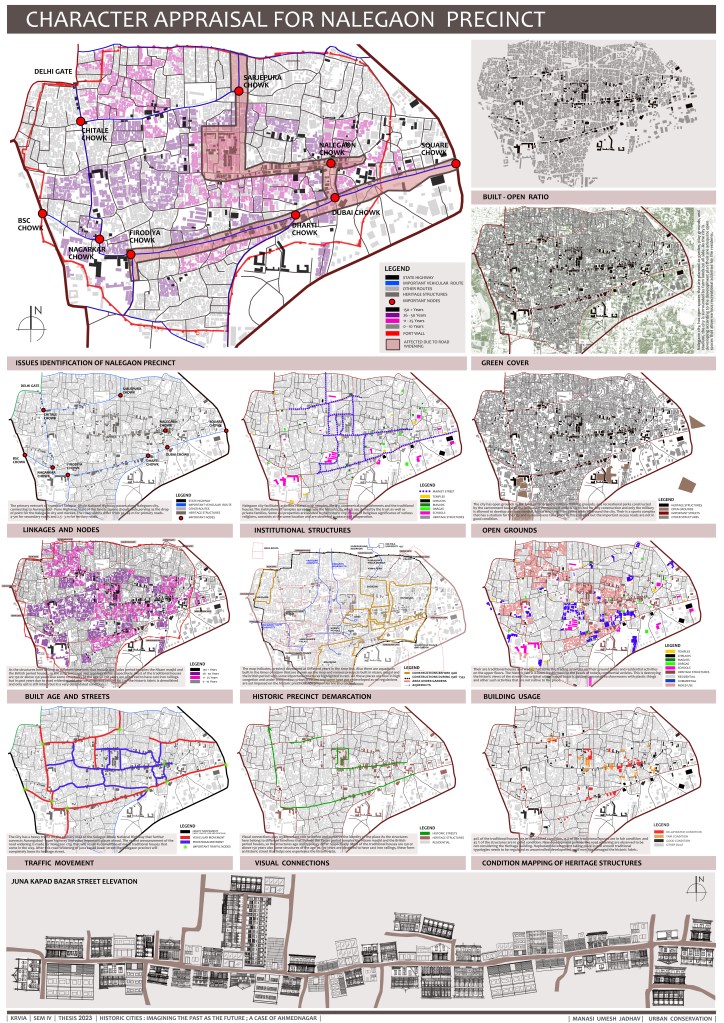
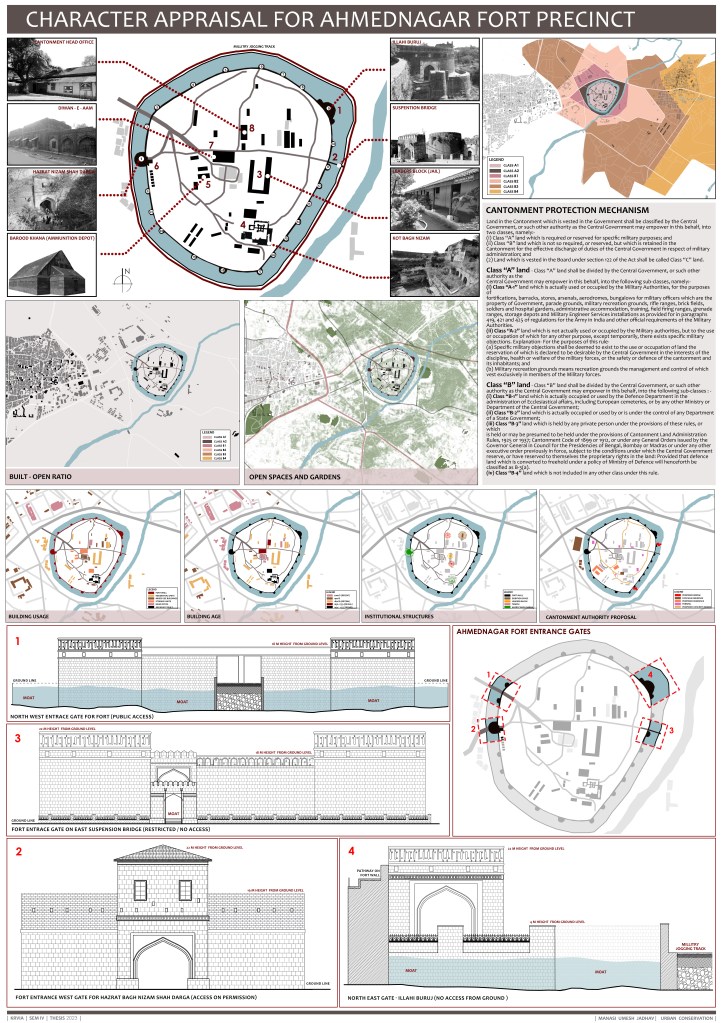
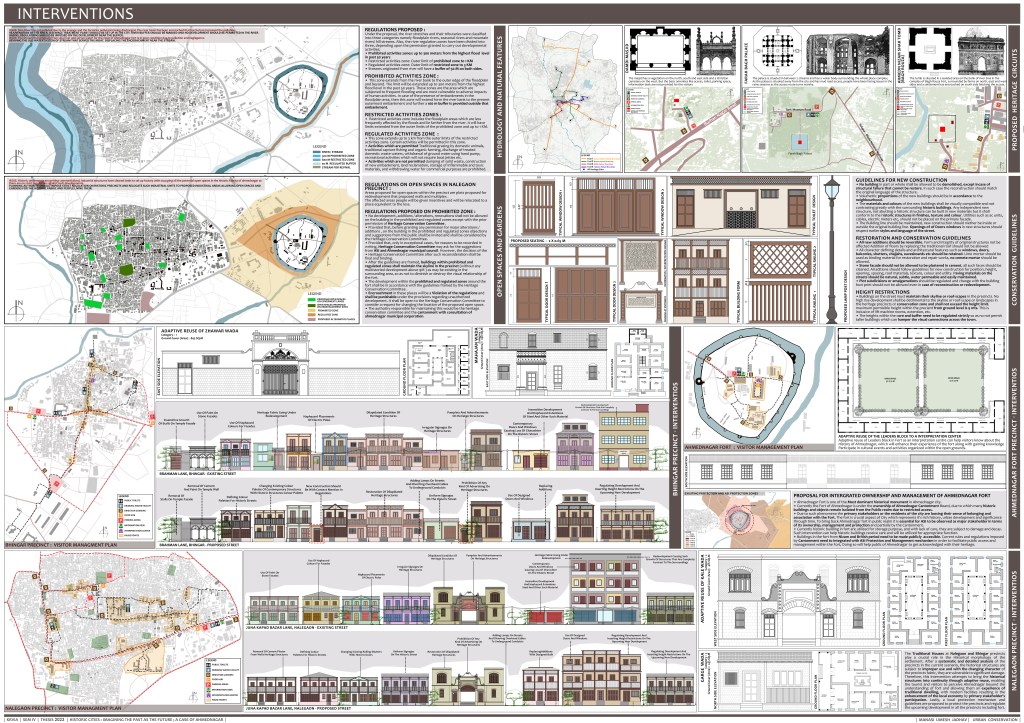
The proposed interventions are intended to strengthen and safeguard the aspects of Ahmednagar’s Historic urban landscape (HUL). The scale of interventions ranges from region level up to building level where the aspects of HUL, such as the site’s topography, geomorphology, hydrology and natural features; its built environment, both historic and contemporary; its infrastructures above and below ground; its open spaces and gardens, its land use patterns and spatial organization; perceptions and visual relationships, as well as all other elements of the urban structure affecting the significance of Ahmednagar. The region-level interventions are formed on a policy level where regulations for conserving River/streams, topography, and open spaces, have been proposed. Guidelines for conserving historic precincts and a heritage circuit are made to establish and narrate a holistic imagination of Ahmednagar through the development of heritage trails. Also, all the protected and unprotected sites/structures listed in the project are proposed with a visitor management plan to provide necessary amenities that enhance their presence in the landscape and establish their relevance. All three historic precincts are proposed with a visitor management plan to allow visitors to experience the historic streets of Nalegaon and Bhingar.
Historic streets have been imposed with guidelines and designed street furniture to preserve visual relationships. The Ahmednagar Fort, which forms an integral part of the city, was not accessible to the public due to cantonment regulations, but a proposal of change in ownership of the fort to ASI is proposed to allow people to experience the historic built in fort shaped through time. Also, public space for activities and events is proposed inside the Ahmednagar Fort, allowing people to connect with the Heritage. Adaptive reuse of Wada’s and buildings in the Ahmednagar fort are proposed as tourist accommodation facilitates and as an interpretation center to bring them back into continuity. Such multiple interventions proposed together intend to mitigate vulnerabilities enabling holistic development at all levels and enhancing the significance of Ahmednagar.

Text & Image Credit: Manasi Jadhav | Krvia – Post Graduate Program | Urban Conservation 2023


Leave a Reply