
Category: Urban Transformation
-
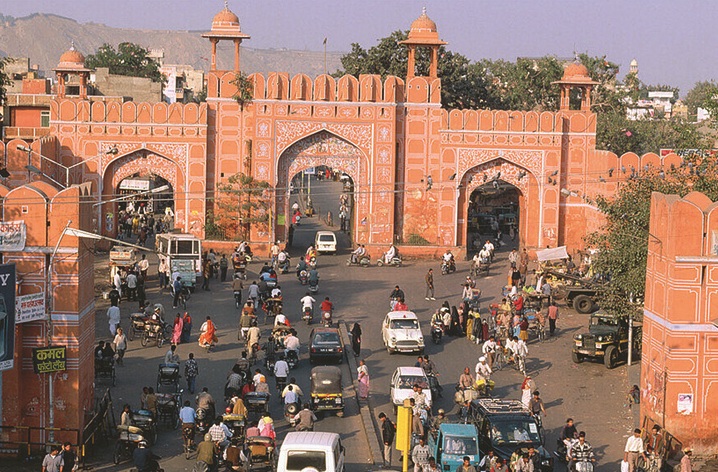
Integrating Creative Culture Clusters and Urban Development: Jaipur
The study explores how integrating creative cultural clusters into urban development can support heritage conservation, socio-economic revitalization, and sustainable urban growth while responding to contemporary challenges.
-
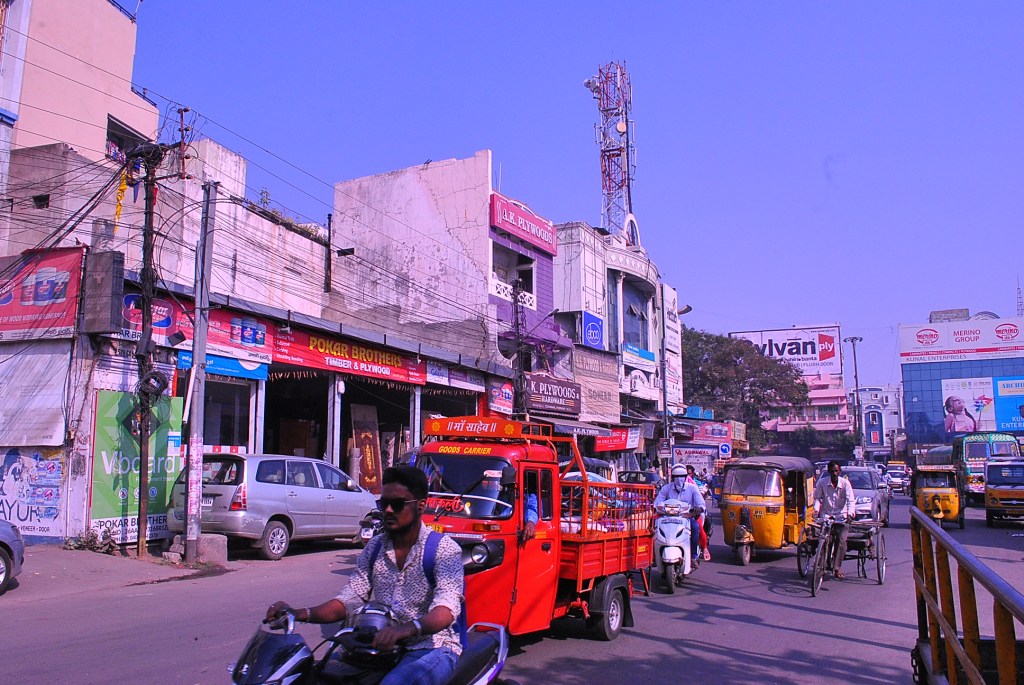
Complexsouth
Urban areas are labyrinthine ecosystems that manifest intricate patterns of human behavior, social interactions, and environmental factors. These complexities are not static; they evolve through time dynamics and system transformations, which are driven by various forces, including technological advancements and changing societal needs. To understand and navigate this dynamic urban complexity, we must employ engagement…
-

Bridging Urban and Natural realms
Case of National Park boundary in Thane City Keywords: Transitional Zones, Sustainable Development, Ecological Sensitive zone, Form Based Codes, forest Indigenous Communities In the context of rapid urbanization and growing environmental pressures, transitional zones between forests and cities offer important opportunities for sustainable development. These areas, where natural ecosystems and built environments meet, are critical…
-
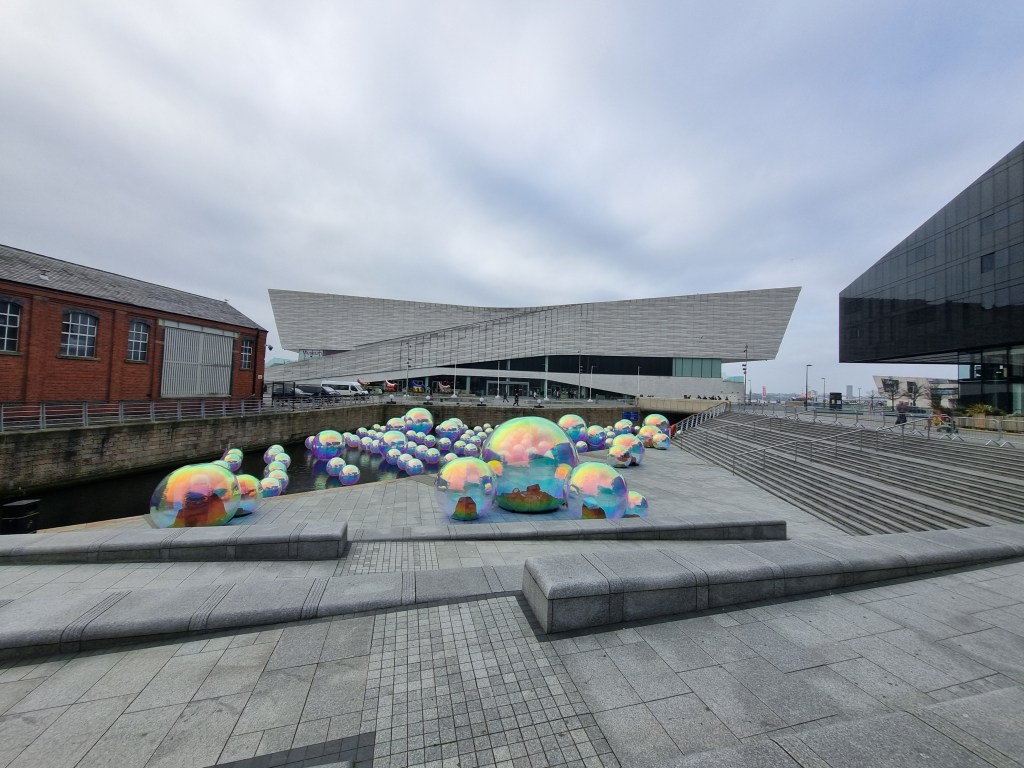
Memorials: Architecture of Redundance
We are witnessing the era of architectural experimentation in the process of progressive generalized abstraction not allowing the sensory experience to assimilate the relationship of concrete to abstract or vice versa
-

Urban Resilience in Coastal Cities: Urban Form X People X Ecology
The study employs a systems approach to uncover the inter-dimensional relations between urban form, people, and the ecology.
-

Understanding Urban Incongruity
There is a need to derive a negotiating framework through understanding incongruity by recognizing the existence of complex spatial informal networks that have evolved over time.
-

Urban Coalescence: Employing the BGI model as a contemporary resolve for the socio-ecological concerns
A vivid reminder of how today’s world came to be the way it is, when industry employed entire communities and provided the heartbeat for many towns and cities. In this respect these historic industrial landscapes deserve our closest attention.
-

Sense of Place: Through Entrepreneurial Setups
Indian cities are known for the liveliness that projects high urban vitality in their traditional way of life. Entrepreneurial setups of varying scales grown organically at every other street, junction, and around prominent structures have been a characteristic of vibrant Indian cities.
-

Changing Nature of Public Realm and Its Role in Urban Transformation
What defines the character of a city is its public space. Public places affect the image of urban communities and are vital for the urban culture and city life.
-

15-Minute City: Utopia or Reality?
The 15-minute city was popularized by the Mayor of Paris Anne Hindalo who used it in her election campaign. The idea entails phasing out vehicles and creating a 15-minute city in an effort to encourage more self-sufficient urban communities with grocery shops, parks, cafes, sports facilities, health centers, schools and even workplaces just a walk…
-
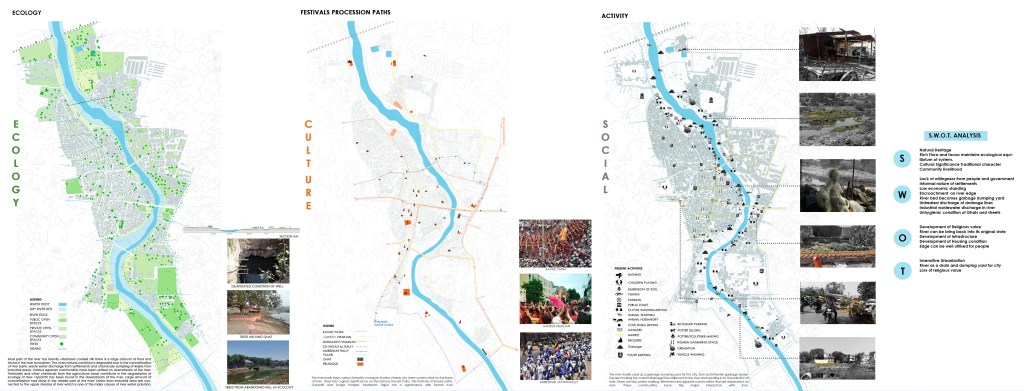
Integrating Natural System of The River in Urban Environment, A Case of Morna River: Akola
The thesis research attempts to study the changing relationship between human and nature through the lenses of ecology, culture and social under the extent of urbanization. It aims to re-establish the lost cultural, social and ecological value of river through public realm in a way that creating a relationship between city and natural environment.
-

Opportunities in historic core of pilgrim towns: case of PandharpuR
Thesis intended to study the association of user (local, pilgrim and tourist) with the built environment and natural environment of the historic core for a holistic approach to conserve the historic core with all its physical and dynamic structural attributes, dealing specifically with the case of historic town of Pandharpur, Solapur
-

Understanding the Notion of Social Spaces within Market Streets
Streets are the crucial part of cities, and with mixed-used pursuits, they become dynamic yet enigmatic. These pursuits speculate a celebration on the streets, creating a thread of character and culture for the city.
-

Developing temporary urban commons by making land uses floating:
This thesis majorly works to give a solution to retain the urban commons or to increase them by making the land uses floating for reserved lands, and their surrounding neighborhoods.
-

Examining the role of quasi formal settlements in the spatial growth of tier two cities: A case of Gunthewari layouts in Aurangabad
The Quasi formal settlements, is a recurring phenomenon observed in the peripheries of the rapidly urbanizing second tier cities and is popular due to the opportunities it provides to the residents. Thus this thesis is an attempt to contribute towards highlighting the presence of quasi formal zones in the urbanizing city through the case of…
-

Strengthening Spatial Dimensions of Landscape and Culture: Case of Nashik, Maharashtra
The thesis aims to study the relationship between human, nature and culture through folklores and mythologies to understand their influence on the spatial organisation of the historic city of Nashik to develop an appropriate strategy for conservation linked to urban development to retain the landscape of various values.
-
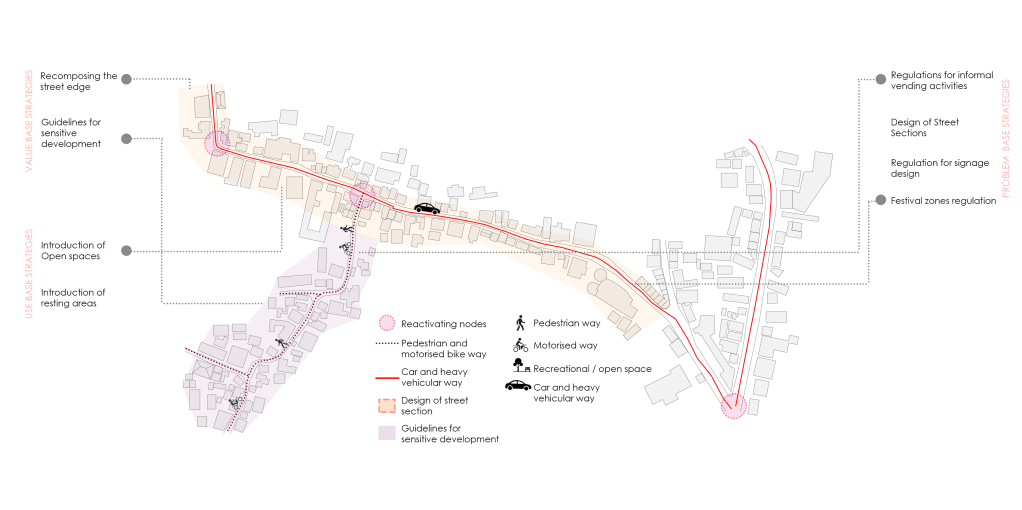
Community Regeneration through Urban Form of streets – A case of Kalyan
The main aim is to understand the importance of streets as centers of social, commercial and physical interface of different activities on a daily basis. The theories of everyday urbanism, life between the buildings talk about streets as important places of communication.
-
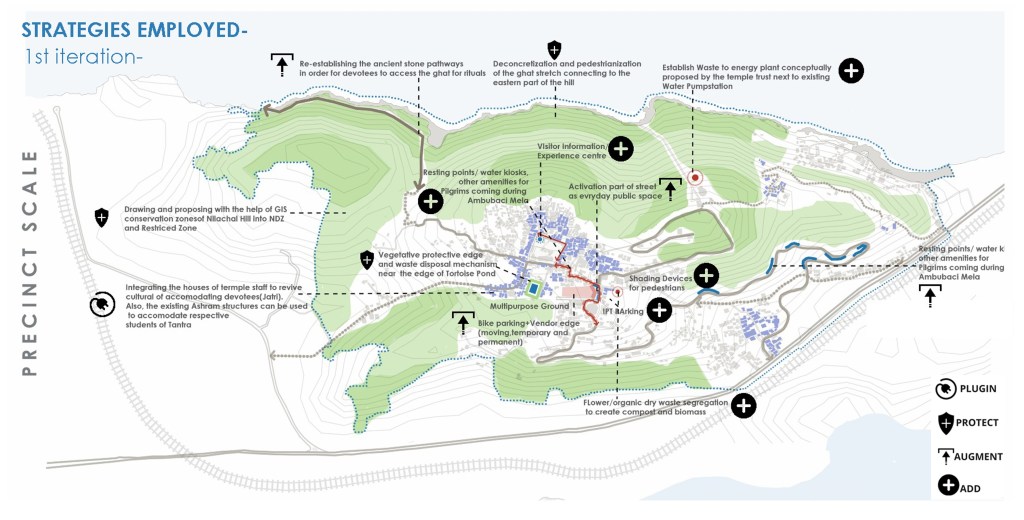
Sacred Spaces : electronics places
Historic Religious cities preserve their identity within them in certain parts called ‘religious precincts’. They have functions that still are embedded in the logic of religious rituals and mythological narratives. They are somewhat of a ‘Palimpsest’ and the newest layer superimposed on them is that of the digital realm. As an effect, this has shifted…
-

Transactional Spaces within Postmetropolis – Sociability in the Public Realm: Case of pune
The reflections of integration of global economy within Indian cities have been observed with the rapid urbanization of the central city and peripheral areas in the last three decades.
-

India’s smart cities mission: light houses?
Smart City in India, Laboratory, Paradigm or Trajectory?
-

journal of Urban Research and Development
Urban Morphology and Resilience
-
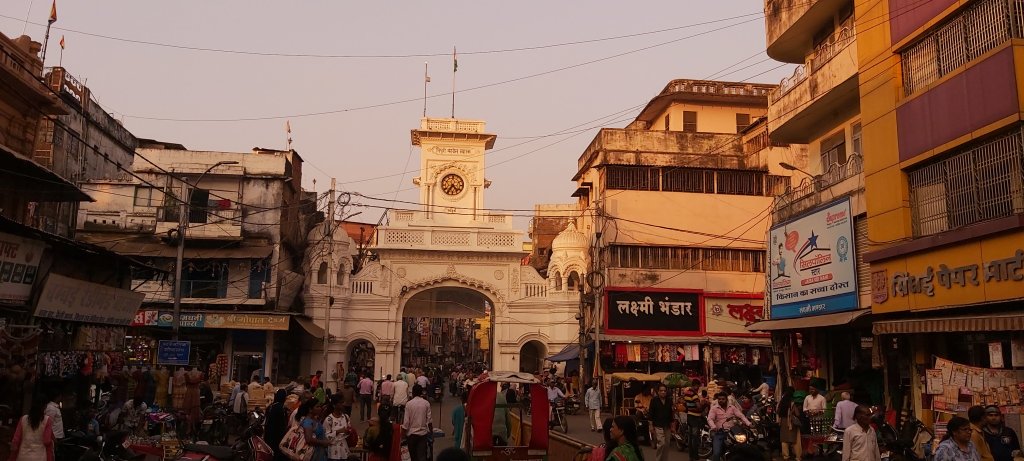
Cultural Quarters as Mechanisms for Urban Regeneration
This blog reviews the concept of cultural quarters as an approach towards urban regeneration. This is a scholarly work of John Montgomery, who is an urban and city regional planner, specializing in the economy, culture and the design of cities.
-

Mapping and Representing Informality
The case of Gazdhar Bandh is very unique, it has been informally built on no development zone and highly vulnerable situation of estuarine conditions. Originally a fishing village on creek edge has been encroached upon and expanded into no development land. Based on an empirical study using participatory tools of survey and mapping in the…
-

Contemporary Perspective on Resilience: Breucom + Krvia
Increased frequency of natural hazards and sea level rise are expected impacts of climate change in India. Marginalized urban settlements are often vulnerable to disaster due to their location in hazardous areas and the use of non-durable building materials, already today their inhabitants are therefore strongly affected by climate change.
-
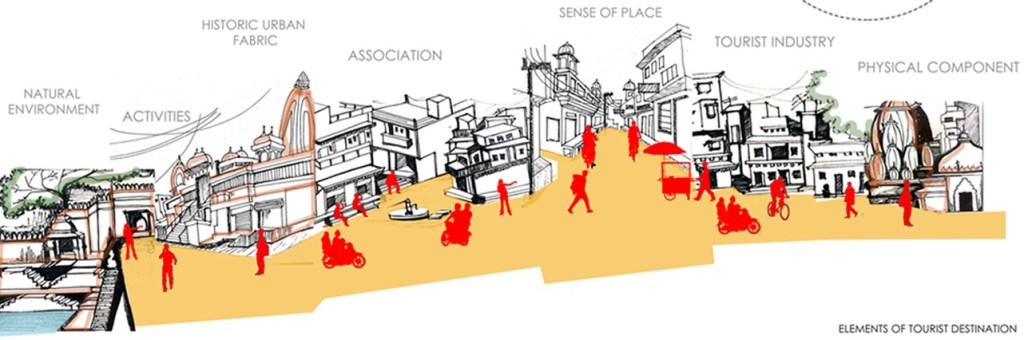
Conservation Management Plan for Mass Tourism: Historic Core of Udaipur
Increased leisure time and changes in lifestyle and consumption patterns have given renewed importance to tourism that either can encourage the preservation and maintenance of the cultural heritage or can be the reason for growing challenges in terms of impacting the relationship of the environment with the built, the significance of the destination and the…
-
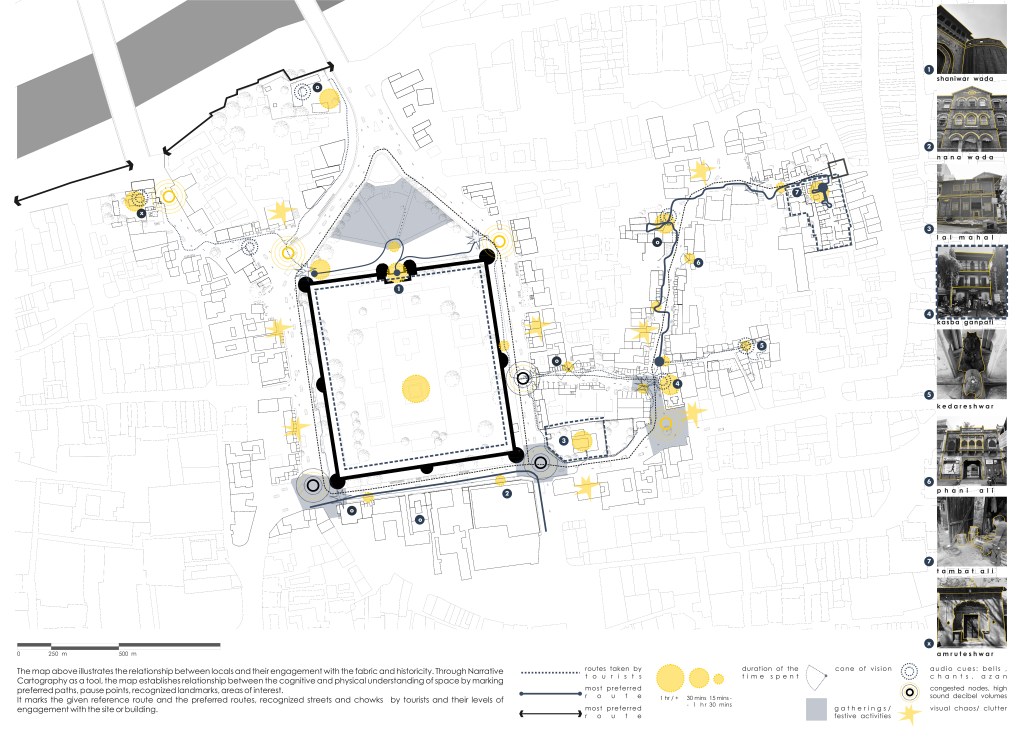
Developing a Conservation Framework for the Historic Core through Phenomenology: Pune
he current development practices governed by logics and codes fail to address this kinetic layer of experience, human associations and engagements; the salient aspects of phenomenological approach, thereby resulting in disjunction of people with their surroundings and razing the ethos of the historic cores.
-

How Will India Fix Her Urban Future?
Author: Dr. Binti Singh | Sameer Unhale How Will India fix her Urban future? is an exploration of key opportunities and challenges in a rapidly urbanizing India. With the help of recent examples and case studies, the authors argue for the promising global position that India has in the post pandemic world. The collection of…
-

Managing the Impacts of a Temporary Pilgrim Event: A Case of Alandi- Pandharpur Waari.
Indian cities are in constant motion. They are composed of different layers. One form is everyday and other is temporary. There are many cultural, religious events which are temporary in nature, taking place periodically around the cities.
-
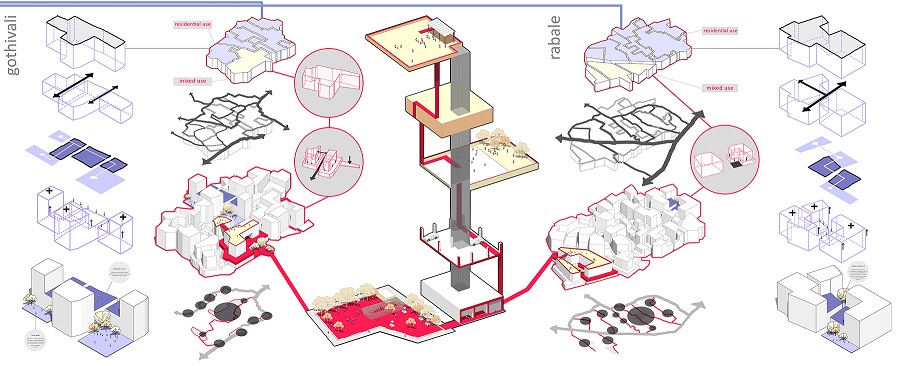
Polarisation
City creation is a practice that evolves historically by allowing different urban actors to contribute within this ‘process of creation’ and that a satellite city negates this choice
-
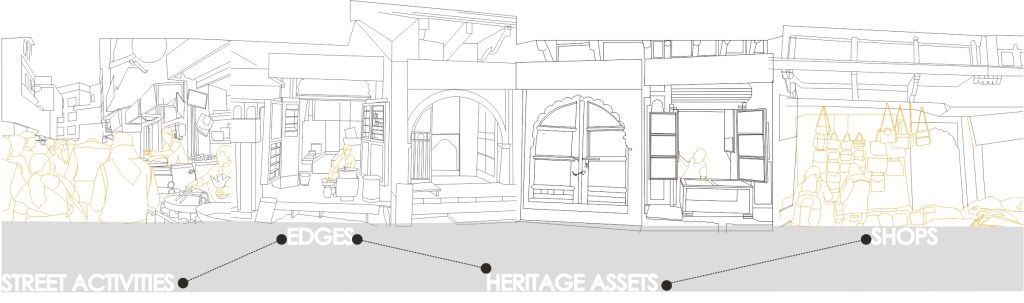
Conservation of Streets-Reaffirming Sense of Place: Mathura.
This study dissects the anatomy of Streets that provide varying experience to the users through different modes, interaction through multiple activities, communication, movement pattern and a place for conversation for the people.
-
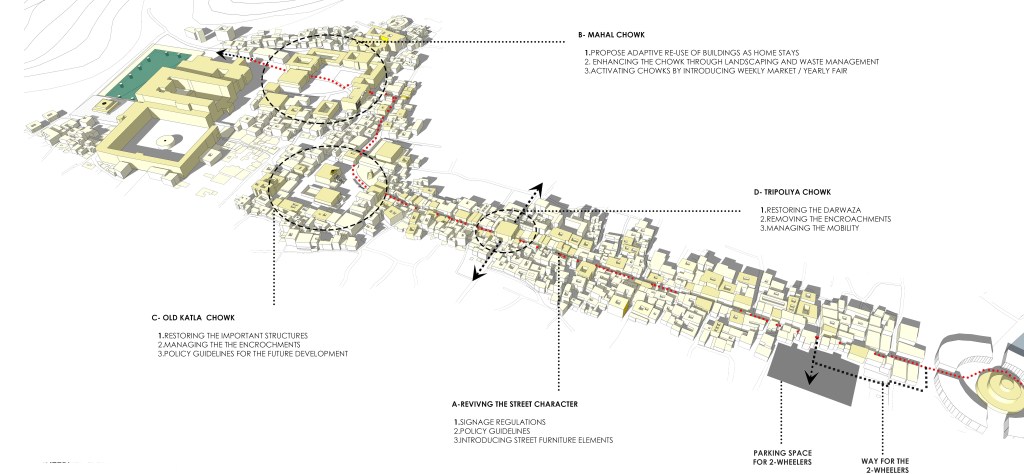
Reviving the Historic Core Through Community Spaces: A Case of Alwar
The research aims at examining the issues and challenges faced by the historic core and investigate and understand the reason why the local-community of historic core is moving to the suburbs. The aim of the thesis is revival of the historic core through community based approach.
-
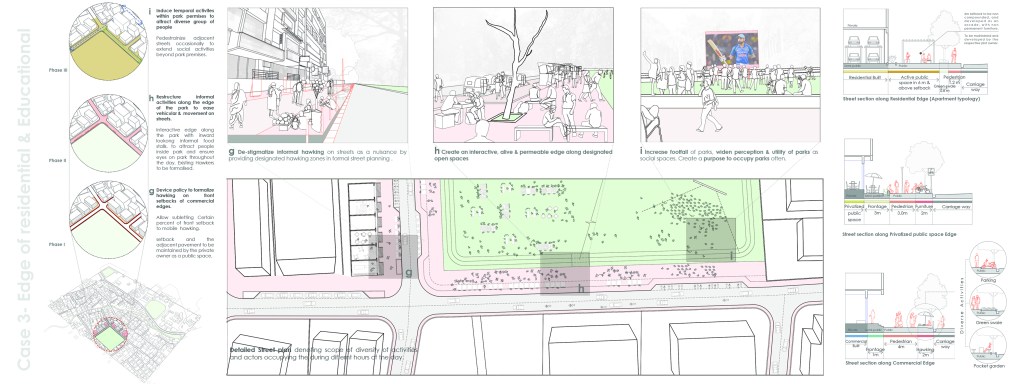
Changing nature of sociability within privatized public spaces.
Indian cities had a very conducive public realm, which facilitated both intended and un-intended social interactions, by virtue of their spatial settings and social structure. The phenomenon of everyone being someone’s someone, was quite natural within an inclusive public realm in Indian cities.
-

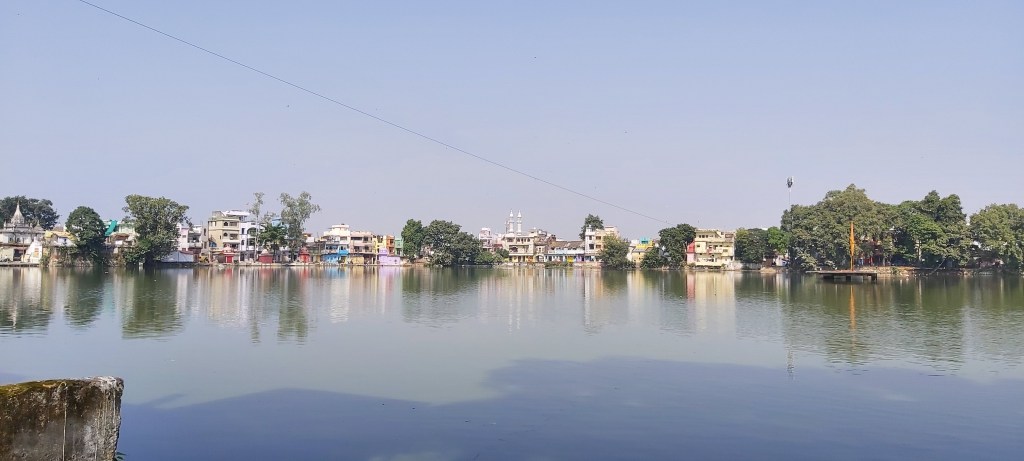
Socio-Ecological Paradigm in Historical Water System – The Case of Jabalpur
The aim was to study the changing relationship between human and nature through the lenses of ecology and values, under the purview of urbanization.
-
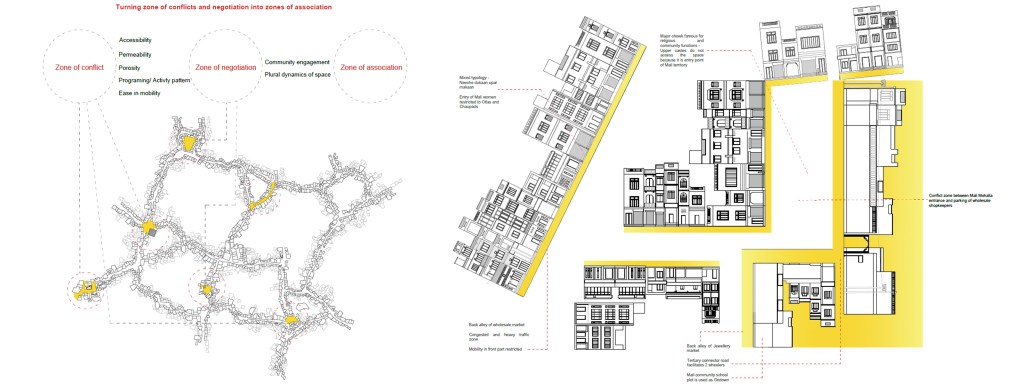
Mapping the Spatial Dynamics of Insurgency: The case of Gurjar Agitation in Rajasthan
Author: Daksh Jain | Krvia – Post Graduate Program | 2020 Insurgency can be understood as revolt or protest against the state or authority following a period of suppression. Insurgent movements are a result of failure of state to provide an inclusive environment of growth and development. It manifests in urban centers creating deep cleavages…
-

Conservation and Up-gradation of the Transforming Economic – Infrastructural Linkages in the Historic Core of Pune City
Urban Transit connections through history and territorial identity are important for establishing ‘place specialization’ in a rapidly urbanizing and global city. Identity of a place becomes an important aspect in planning process and continues to look into conserving more buildings in order to retain the collective character and memory of places
-

Exploring everyday urbanism and “cultural territories” in the context of Mumbai
This Research is a spatial exploration of everyday life within a ‘cultural territory’ to assess, design and create socio-culturally implicit spaces which are being hampered due to rapid urbanization process.
-

SDG and Smart City in India
https://www.taylorfrancis.com/sdgo/goal/SustainableCitiesAndCommunities/all/chapter/d736a843-1940-4e1c-accd-731b39a68105
-

Cultural Territories and Urban Resilience
This is an ongoing effort to consolidate the resilience understanding in Indian context. The blog and video is an attempt to bring resilience perspective on soft cities. I: e culture of cities.
-
New Frontiers of Urban Theory – A Global South Perspective
The literature on global cities is abundant but until recently most of it has been in relation to cities of the developed North. Rapidly urbanising second and third tier cities of India have now, however, grabbed scholarly attention propelling a ‘Southern turn’ in urban theory. The massive urban transformations currently underway throughout such cities calls…
-
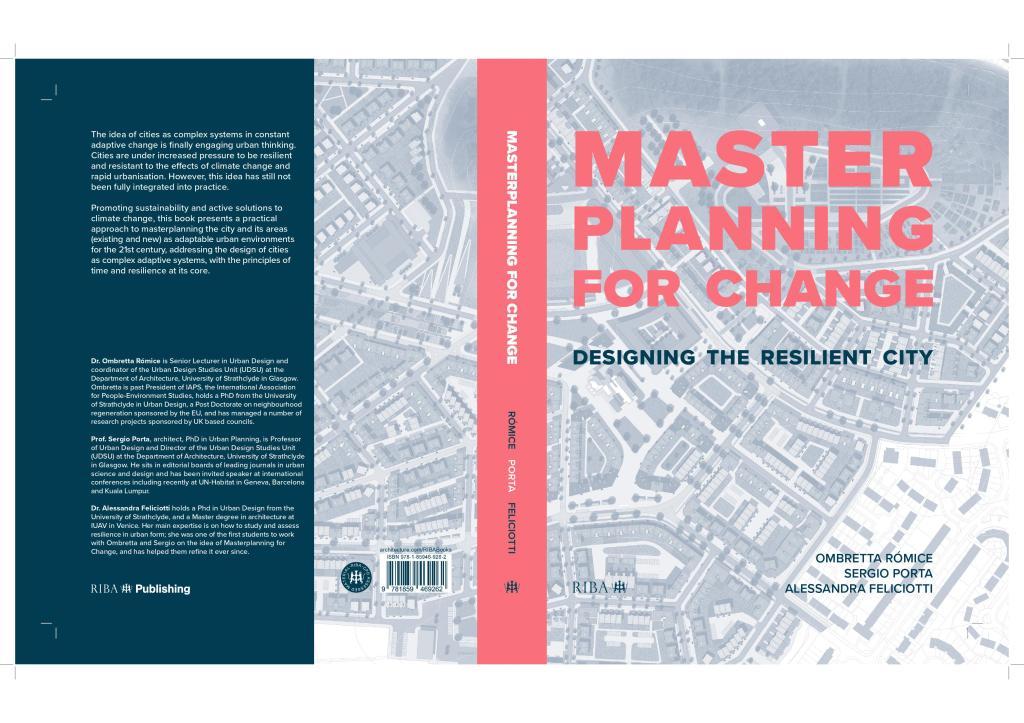
Master Planning for Change
Amongst the several publications dealing with resilience strategies and adaptability for urban systems (which are made up of several parts), this publication sets the urban discourse with “Cities as Living System” depicting a multitude of behavior in transition or situational change.
-

Real estate, housing and neo-liberalism
In Mumbai given the acute housing shortage and its prevailing unaffordability, the increasing dilapidation of existing housing stock and limited choice for slum rehabilitation, redevelopment has been seen as a workable strategy under certain conditions.

