
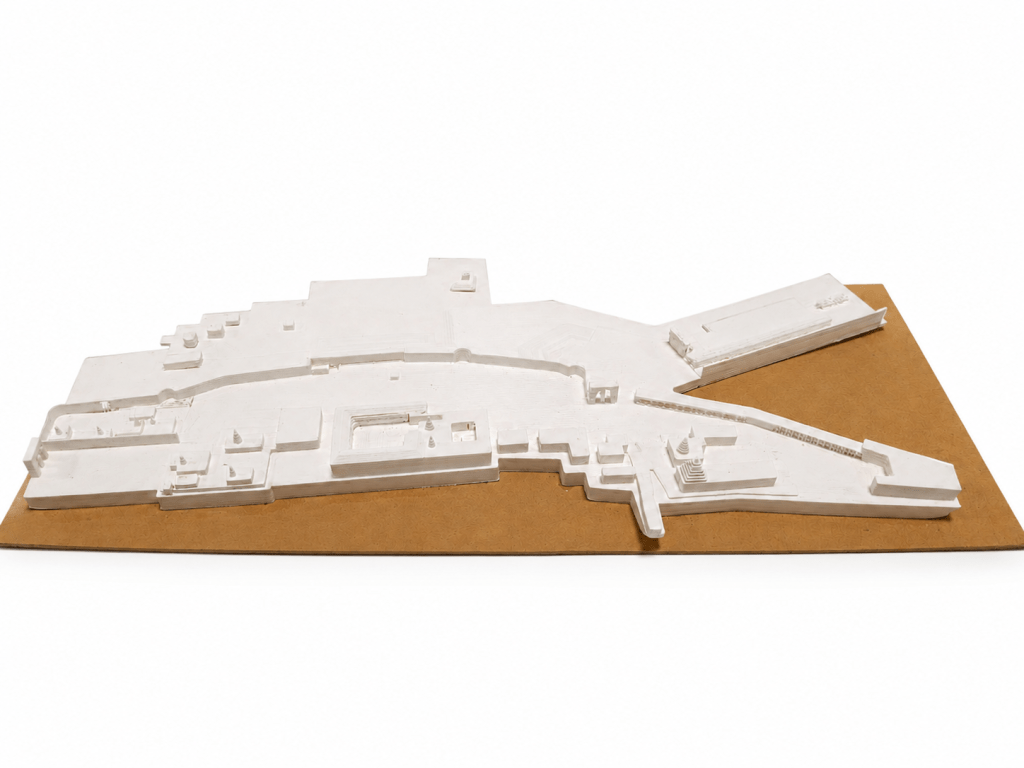
Case of Gangakhed,
This study investigates how collective consciousness shapes, sustains, and transforms the sacred-scape of Gangakhed, a historic river-based pilgrimage town. Collective consciousness is understood as a shared system of beliefs, rituals, values, and cultural practices that binds communities and finds spatial expression through interconnected networks of temples, ghats, pilgrimage routes, public spaces, and everyday environments. Rather than treating sacred landscapes as static heritage entities, the study conceptualizes them as living sacred-scapes dynamic socio-spatial systems that continuously evolve through the interaction of people, rituals, ecology, and local livelihoods.
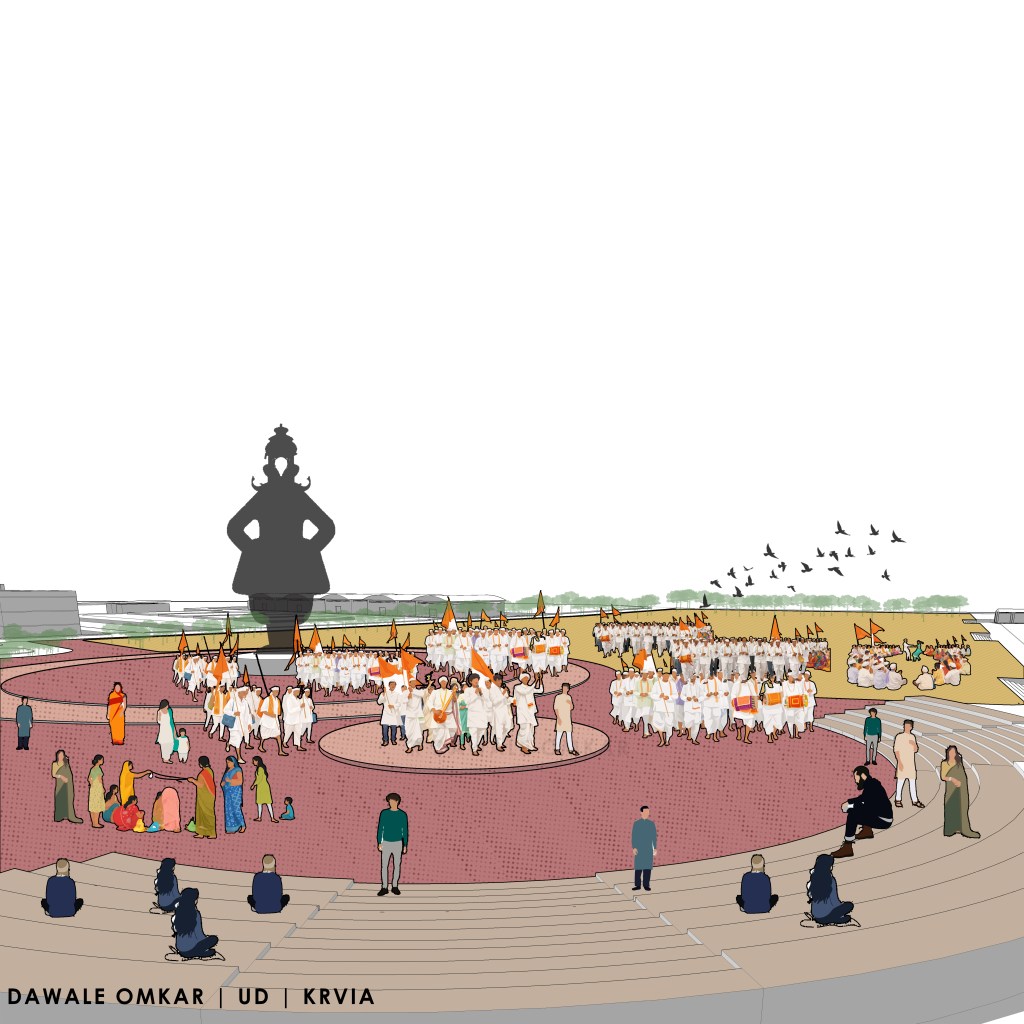

The concept of the living sacred-scape provides the central theoretical framework for this research. Within this perspective, sacredness is not confined to individual monuments or religious precincts but emerges through a network of interconnected spatial, ecological, and social relationships. In Gangakhed, the river functions as both an ecological resource and a cultural spine, structuring ritual practices, pilgrimage movements, seasonal festivals, and everyday activities. Temples, ghats, sacred routes, public spaces, and river edges collectively constitute an integrated network where sacred meaning is continuously produced and reinforced through collective participation, repeated rituals, and cyclical cultural practices.
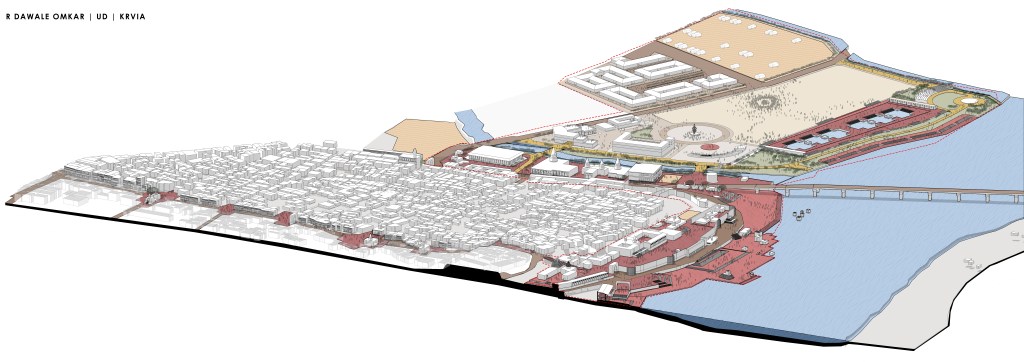
To examine these relationships, the study adopts a multi-layered methodological framework that integrates spatial, historical, and ethnographic analyses. It documents both the tangible components of the sacred-scape including temples, ghats, settlement morphology, and the built fabric and the intangible dimensions of rituals, festivals, processions, oral traditions, and patterns of everyday use. Historical analysis traces the evolution of the sacred network, while regional, town, and precinct-level mapping reveals its contemporary spatial organization, connectivity, and intensity. This integrated approach enables the identification of sacred nodes, ritual corridors, activity gradients, ecological systems, and their interrelationships, thereby revealing the underlying structure and functioning of the living sacred-scape.
The analysis demonstrates that the continuity of this interconnected system is increasingly threatened by rapid urbanization, fragmented development, ecological degradation of the riverfront, and institutional and governance deficiencies. These pressures have disrupted ritual networks, weakened the spatial continuity between sacred places, diminished the cultural significance of public spaces, and compromised the ecological integrity of the river edge. As a consequence, the collective practices that sustain the sacred identity and cultural memory of Gangakhed are progressively eroding.
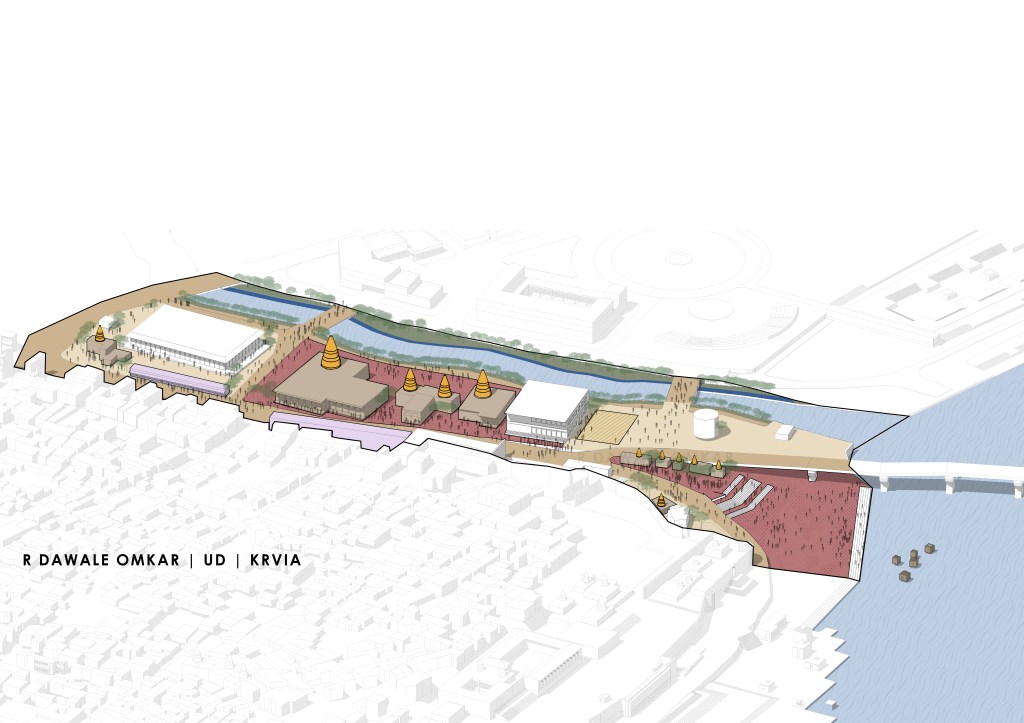
In response, the study proposes a cultural-spatial framework for revitalizing the living sacred-scape by re-establishing the relationships between sacred networks, community life, and ecological systems. The framework develops precinct-based urban design strategies that reconnect ritual routes, revitalize ghats and public spaces, and restore river-edge ecologies through integrated blue-green infrastructure. Rather than treating these interventions as isolated design projects, the framework conceives them as interconnected systems operating across multiple scales, thereby reinforcing the spatial expression of collective consciousness and ensuring the continuity of sacred practices.
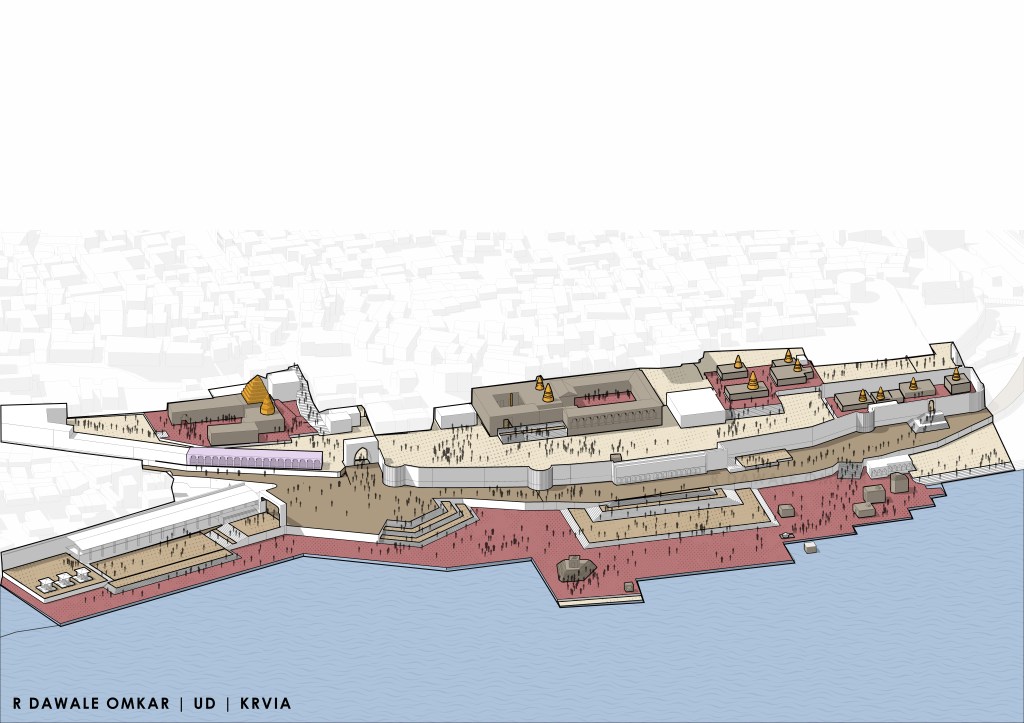
The proposed framework also recognizes the critical role of community participation, local governance, and livelihood systems in sustaining the sacredscape. By aligning spatial interventions with existing cultural practices, ecological processes, and local economic activities, it supports both the continuity of tradition and the adaptability required to respond to contemporary urban challenges. The emphasis is placed on fostering environments where everyday life, ritual engagement, ecological resilience, and cultural identity coexist and mutually reinforce one another.
Ultimately, this study argues that the long-term sustainability of sacred environments depends not merely on preserving individual monuments but on restoring and strengthening the relationships between people, place, practices, and ecological systems. By advancing the concept of the living sacred-scape, the research offers a comprehensive framework for understanding, documenting, and designing sacred environments as evolving socio-ecological systems in which cultural identity, collective consciousness, and environmental processes are continuously negotiated and sustained over time.
Image & Text Credit: Omkar Dawale | KRVIA Alumni | M. Arch – Urban Design Thesis | 2026


Leave a comment