
Case of Bidri Town, Karnataka
This thesis explores the potential of cultural economy as a driver for urban regeneration in Indian towns, focusing on the integration of tangible heritage, intangible cultural practices, and local livelihoods within the urban fabric. Cities are understood not merely as physical entities but as dynamic systems shaped by the interaction of people, culture, and economy. Traditional practices such as crafts, rituals, and community-based activities contribute not only to economic value but also to identity, continuity, and a sense of place.
The study is grounded in the concept of the symbolic economy, which recognizes culture as a dual system generating both economic and symbolic value. Cultural assets, such as monuments, craft traditions, and community practices are therefore positioned as active resources that can contribute to sustainable and inclusive urban development when integrated into spatial planning.
Bidar, a historic town in Karnataka, is chosen as site due to its rich cultural landscape, characterized by a concentration of heritage structures in the Old Fort area and the traditional craft of Bidriware practiced by artisan communities. Despite this cultural richness, the study identifies a significant disconnection between cultural assets and the city’s contemporary economic and spatial systems. Cultural practices and heritage remain fragmented, with limited interaction between production, exchange, and public life. This has resulted in declining craft livelihoods, underutilized heritage spaces, and a weakening of cultural identity within the urban structure.
Through a multi-scalar analytical approach, the thesis maps the distribution of cultural assets, examines their connectivity, and analyzes how cultural systems operate through production, consumption, and exchange. A practice-based framework is used to understand the interaction between livelihood, cultural, social, and incremental practices within the Old Fort precinct. This analysis reveals that while cultural activities are present, they are spatially disconnected and lack integration within the broader urban system.
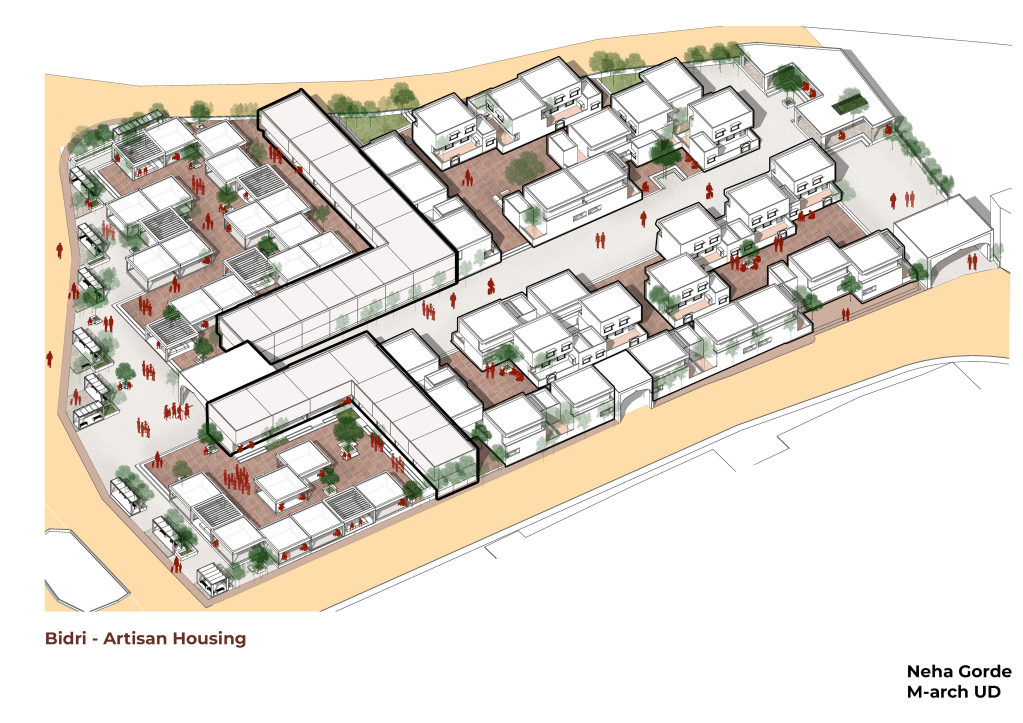
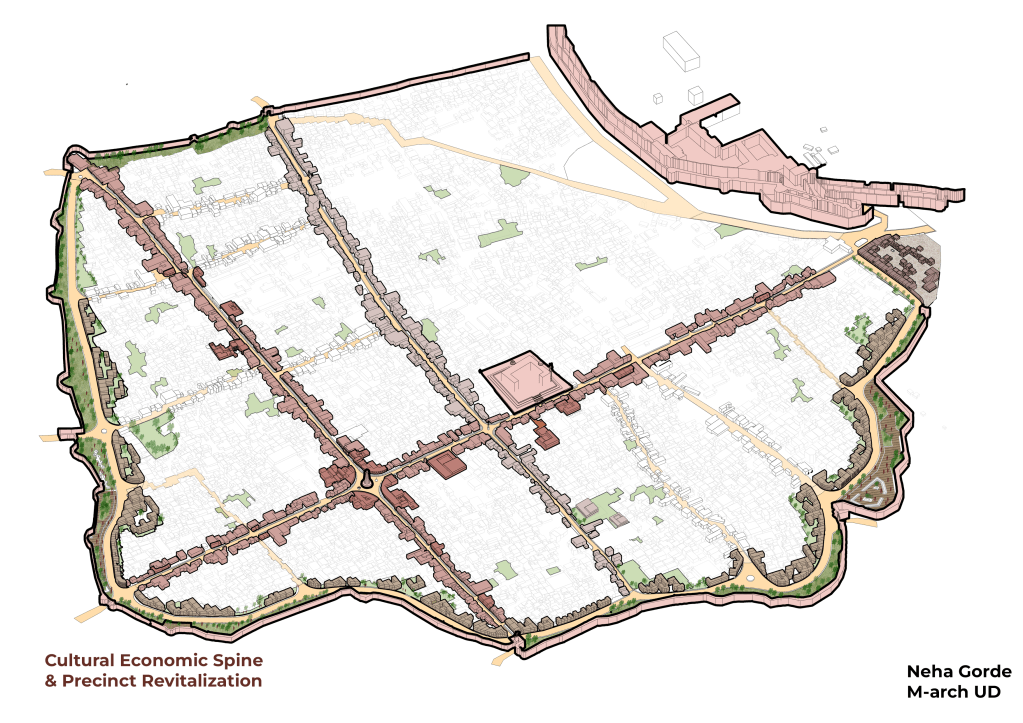
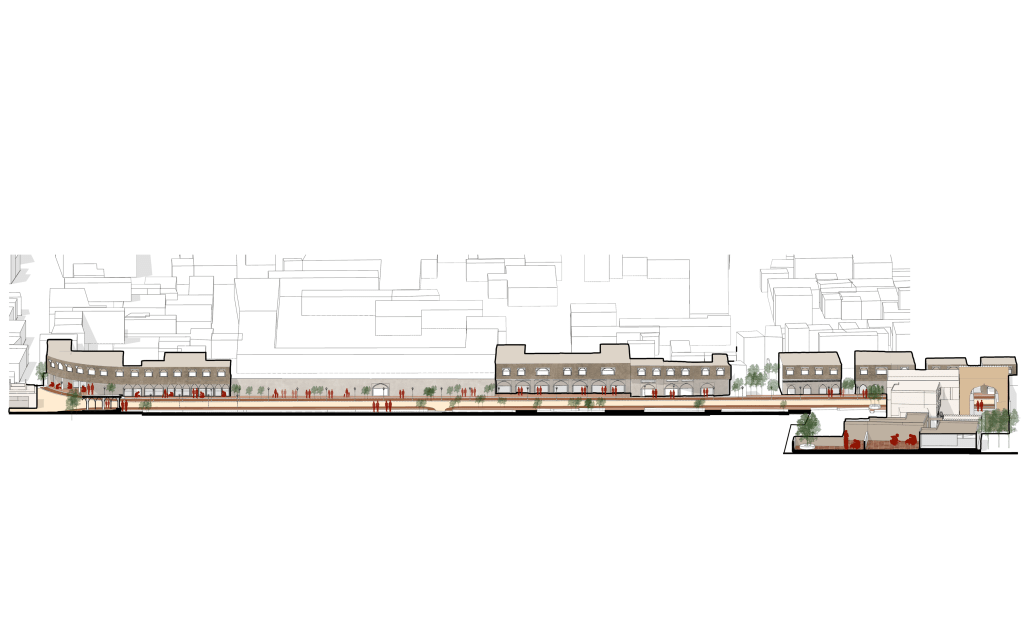
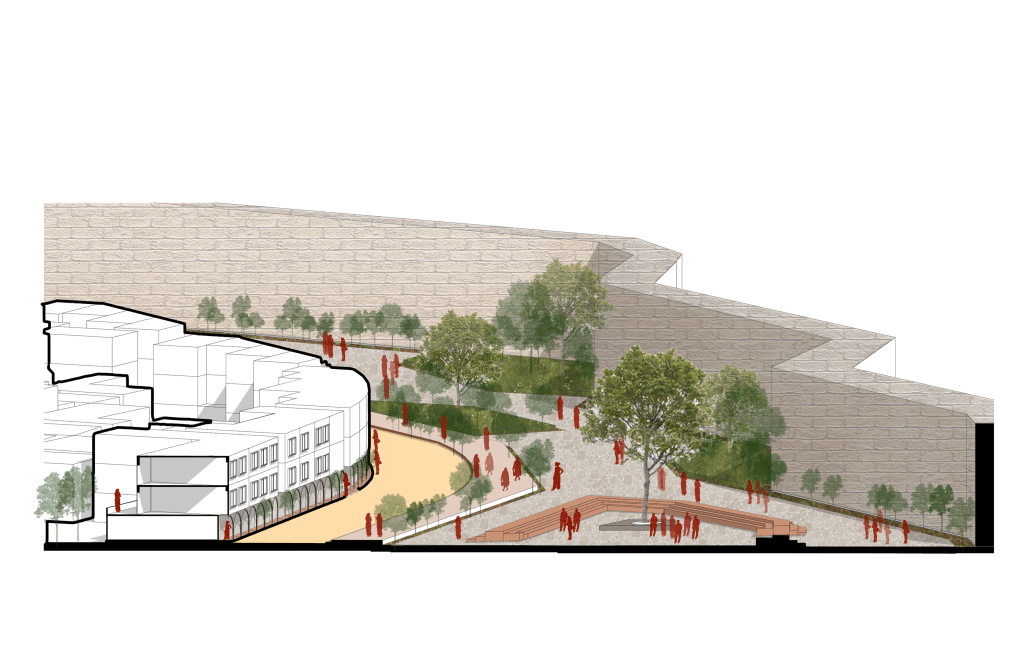
Based on these findings, the thesis proposes a culture-led urban design strategy aimed at reconnecting fragmented systems. The intervention focuses on the Old Fort precinct as a key cultural core, introducing a cultural-economic spine that links major heritage nodes, public spaces, and activity areas. The proposal integrates live-work environments for artisans, activates underutilized public spaces, and strengthens pedestrian connectivity to enhance accessibility and visibility of cultural practices.
The design approach emphasizes the role of urban form in facilitating interaction between production, exchange, and everyday life, transforming isolated cultural assets into a cohesive system. By embedding cultural economy within the spatial and functional structure of the city, the thesis demonstrates how urban design can support resilient livelihoods, enhance public life, and reinforce local identity.
The study highlights that culture-based economies, when strategically integrated into planning and design processes, can serve as powerful tools for sustainable, inclusive, and place-based urban regeneration in Indian towns.
Image & Text Credit: Neha Gorde | KRVIA Alumni | M. Arch – Urban Design Thesis | 2026


Leave a Reply