
A case of Vadodara
Keywords: Social Networks, Water systems, Bonding, Bridging, Social Capital
The Thesis research reimagines urban water systems as socio-spatial infrastructure that can strengthen social networks and generate social capital by integrating ecological systems with public space and everyday community life.
Contemporary cities are increasingly characterized by the fragmentation of shared infrastructures, leading to weakened social networks and diminished collective engagement. This thesis investigates how intangible social relationships can be spatially understood and strengthened through tangible urban systems, positioning water networks as a critical framework for analysis and design. Drawing on Ronald Burt’s theory of network-based social capital, the study develops a method to translate social network dynamics into spatial conditions.
Using Vadodara as a case study, the research maps historical and existing water systems alongside patterns of social activity to identify zones of cohesion, connection, and disconnection. The findings reveal that the invisibilities and fragmentation of water systems have contributed to reduced social interaction and ecological neglect.
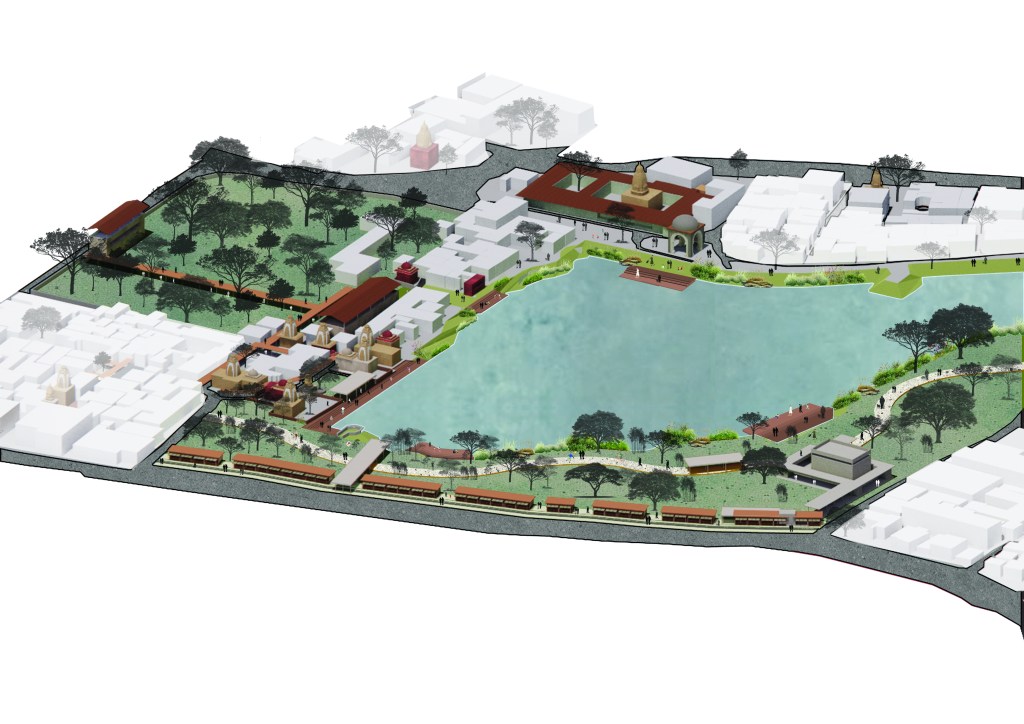
In response, the design proposal re-integrates water into the public realm through a network of blue-green corridors, activated edges, and contextually derived built form. Operating across multiple scales, the intervention strengthens local communities, connects diverse groups, and repairs spatial gaps. By embedding water into everyday urban life, the project demonstrates how urban design can generate social capital, enhance environmental awareness, and foster long-term stewardship.
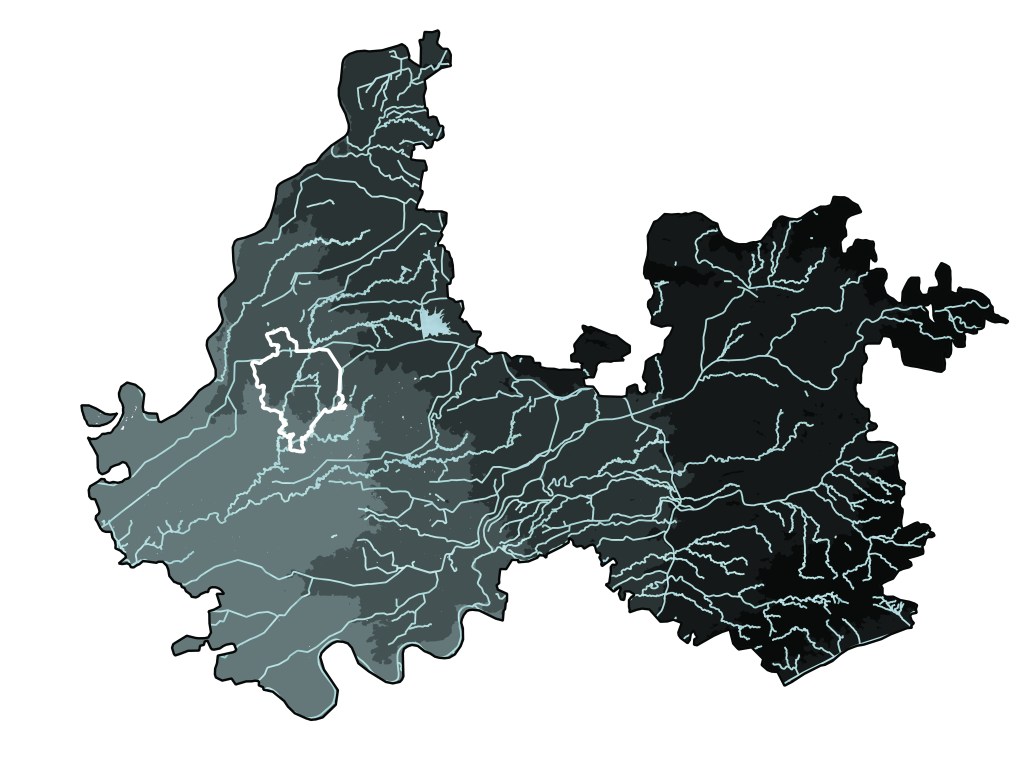
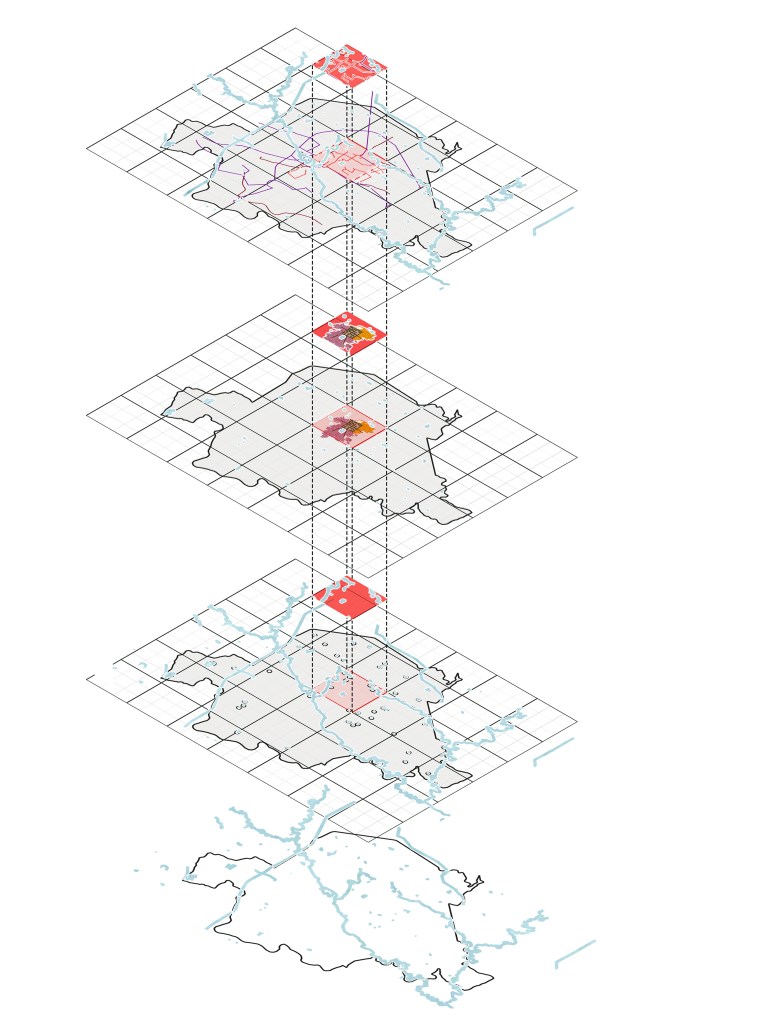
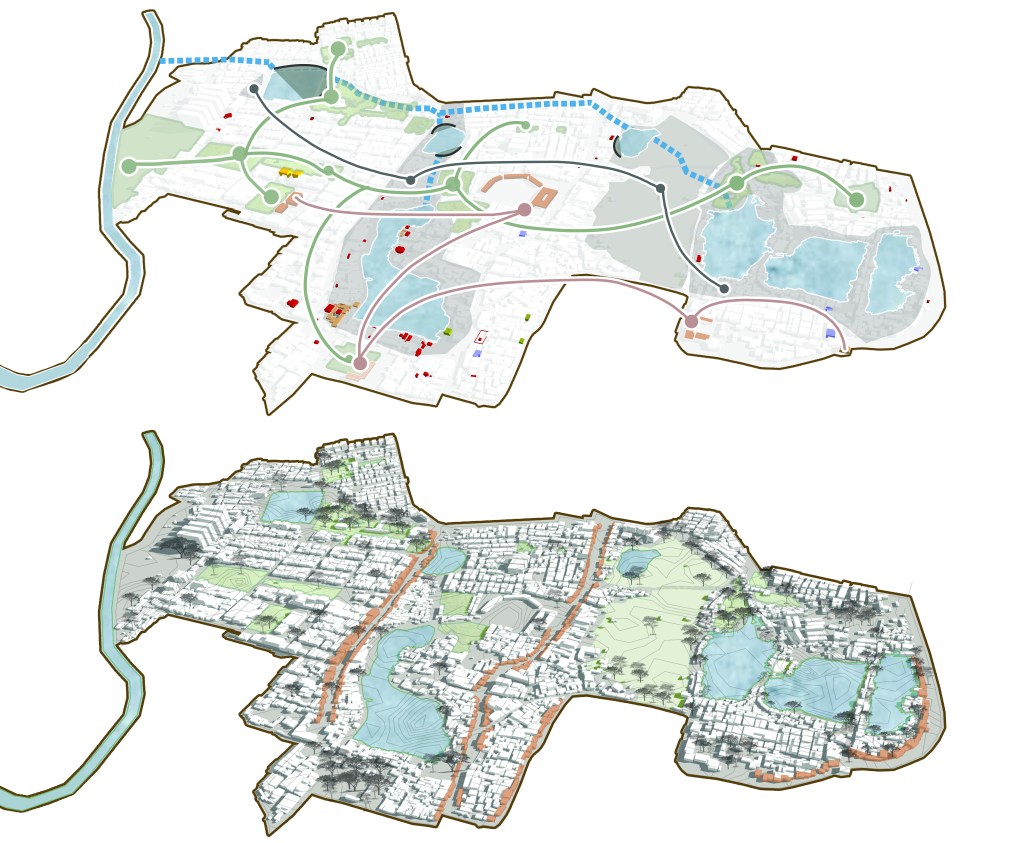
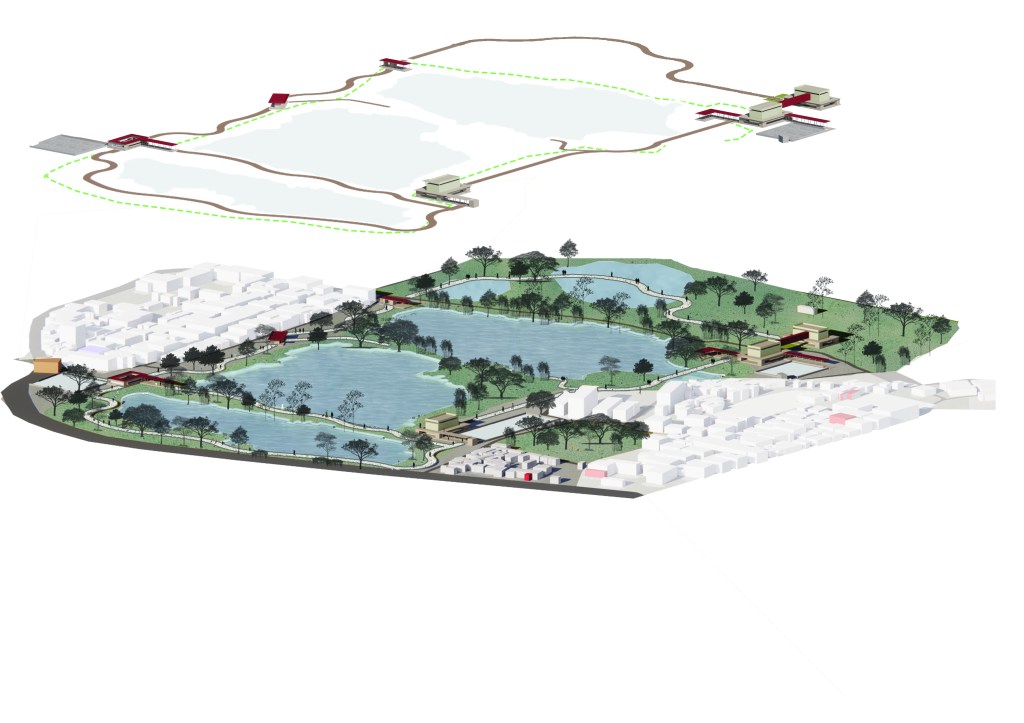
Image & Text Credit: Dhanika Joshi | KRVIA Alumni | M. Arch – Urban Design Thesis | 2026


Leave a comment