

The intersection of architectural theory with respect to cultural studies and cultural theory has become increasingly important in the discourse surrounding contemporary architecture. This integration not only improves the aesthetic and functional debate of architectural , but also deeply influences the way we perceive cultural identity and spatial narratives are built and perceived. It emerges from the recognition that buildings are not simply physical structures, but also achievements of socio -political contexts, cultural stories and individual identities.
The cultural theory explores the architectural from everyday perspective, the meaning and identity that generates through its philosophical position and ideological & semiotic inquiries. The sphere of cultural studies explores the architectural theory from everyday perspective in relation with power, ideology, how they are mediated with production of objects and its relationship with the institutions.
As architectural theory continues to evolve, its integration with cultural studies will undoubtedly shape the future of design practices. This evolution defends a paradigm in which architecture not only serves as an expression tool but also as a means to communicate and preserve cultural identities through space narratives. In this context, architecture is redefined not only as the disposition of physical forms but as a comprehensive component of cultural dialogue, which reflects the dynamic interaction between identity, community and place.
It is equally important to understand the nature of discipline that would influence the inquiry within the sphere of cultural theory and cultural studies in relation to building of architectural theory.
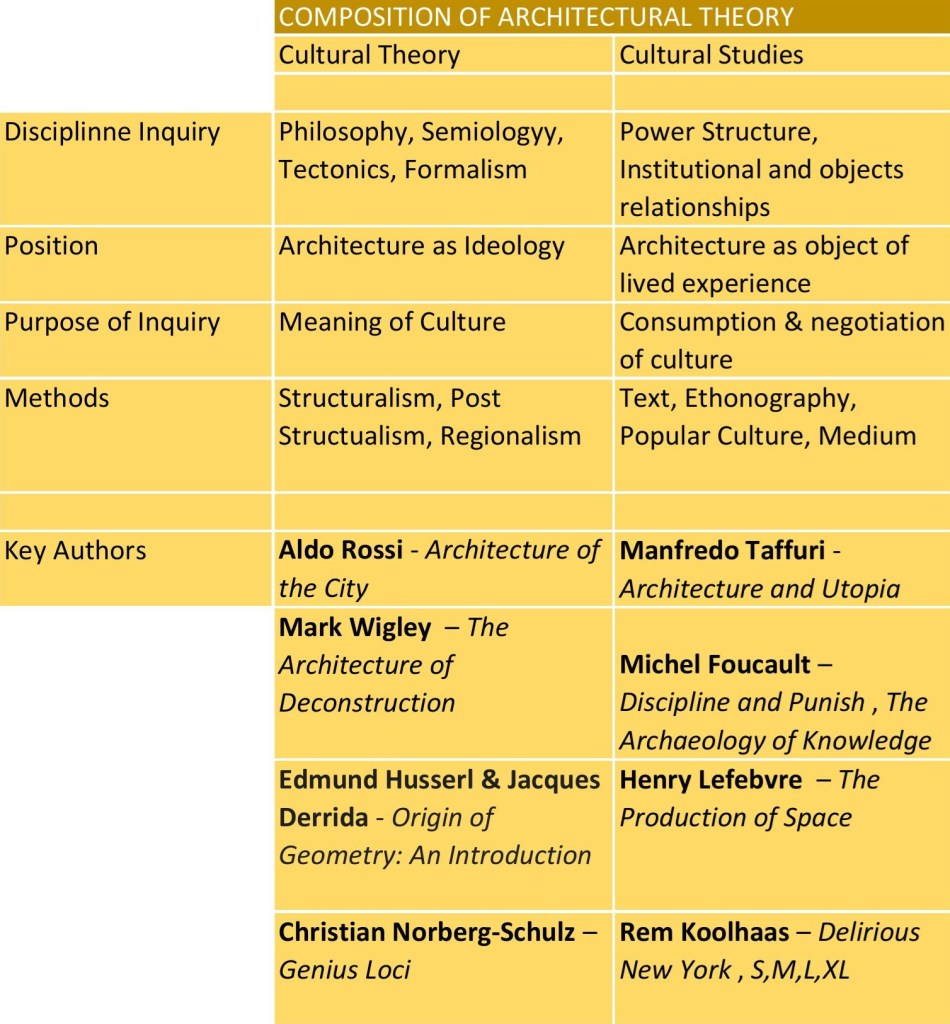
In either of the case, the most imperative aspects is “to be critical, one often needs distance from immediate circumstances, because immersion tends to normalize or naturalize them”.
- Pierre Bourdieu argued that social actors are “caught” in their habitus and fields, and true critique requires a reflexive stance that makes the taken-for-granted visible.
- Michel Foucault emphasized that critique involves questioning the conditions of possibility of knowledge and power, which means stepping outside their immediate logics.
- In architectural and urban theory, critics like Henri Lefebvre suggested that everyday life is both the site of alienation and the site of possible critical awareness—but recognizing it requires defamiliarization.
Image Credit: Manoj Parmar Architects


Leave a comment