
The library is a poignant representation of the role of architecture in the formation of social values and promotes community identity in a world of rapid change.
The Vadodara Central Library is a noted public building in Vadodara by Edvin Luteyens whose work left a deep mark in the landscape of Indian architecture during the British colonial period. Founded in 1904, the library is a proof of the synthesis of traditional Indian architectural elements with neoclassical influences that were characteristic of the Luttyens work. It is important to note that the library’s architectural prestige and the cultural resonance is so prominantly visibile in Vadodara Cultural Narrative.
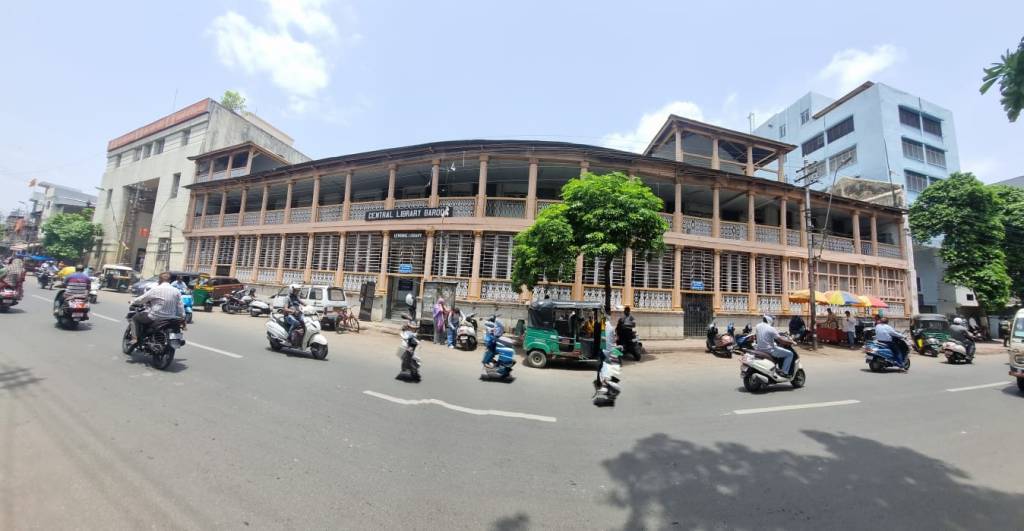

Fundamentally, the Vadodara Central Library exemplifies the Luttyens work by symmetry and proportion, integrating classic motives with local architectural traditions. The library facade, characterized by high ceilings, large arch windows and a large ladder, is inspired by Renaissance principles, merging them perfectly with indigenous styles. This ideological juxtaposition reflects the colonial intention of establishing a cultural footprint while trying to dignify local traditions in the midst of European aesthetics. The use of predominantly local materials and local brick exemplifies its sensitivity to the environment, further integrating the structure in Vadodara’s cultural context. These materials not only give durability, but also harmonize with regional colors and textures, emphasizing the functional role of the library as a community -centered institution.
In addition, the library design incorporates the domain of light and the space. Extensive use of natural light in reading rooms and communal areas serves to create an atmosphere conducive to learning and reflection. High ceilings and spacious interiors neutralize the oppressive heat of the Indian climate, and the strategic placement of the windows allows cross ventilation, increasing user comfort.
The cultural impact of the Vadodara Central Library extends beyond its architectural form; It became a vital institution within Vadodara’s urban fabric. The library serves as a repository of knowledge and culture, promoting literacy and learning between the community. His establishment coincided with a period of growing nationalist feeling in India, positioning the library not only as a passive collection of books, but as a dynamic space for intellectual involvement and the discourse of the community. The architecture itself is a symbol of progress and lighting, crucial during a period when access to education was strongly stratified.
In addition, the library acts as a catalyst for social interaction, bringing together various segments of the population. Its role in hosting events, exhibitions and educational programs promotes a sense of ownership and collaboration of the community. The library becomes a place of cultural exchange, a place where ideas propagate and local inheritance is preserved. In this sense, the design of Luttyens transcends the mere aesthetic, incorporating the ideals of public service and community enrichment.
Image Credit: Manoj Parmar Architects


Leave a comment