
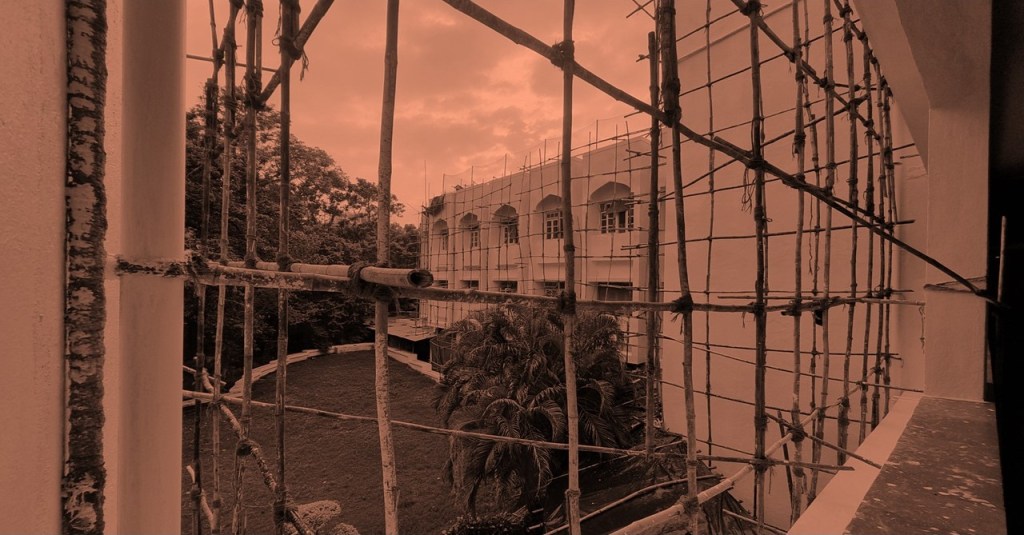
Architectural Studios: Crisis and Challenges
The architectural studio, a mainstay of design education in architecture, faces multifaceted challenges that hinder its ability to produce architects equipped for contemporary realities. The vast cultural and climatic diversity across the country demands a curriculum that integrates regional architectural practices, indigenous knowledge systems, and sustainable methodologies while keeping pace with global innovations. However, the current pedagogical framework often falls short, constrained by outdated structures and a lack of critical engagement with emerging paradigms.
Three key concerns define this stagnation:
1. Syllabus as Minimum Standards: A Limited Framework
The architectural syllabus in India is often seen as a fixed set of minimum standards rather than a dynamic framework for inquiry and critical thinking. While these standards provide structure, they also limit the potential for studios to evolve into spaces of critical exploration. Instead of fostering a culture where architectural questions are raised—balancing regional influences, socio-political concerns, and technological advancements—the curriculum remains rigid and struggles to keep pace with the rapid transformations of the profession and society. This results in a gap between intent of a design studio as a prescriptive method vs design studio as a place for exploration.
2. Naïve Functionalism: The Absence of Critical Engagement
Architectural studios in many Indian institutes are constrained by a narrow focus on functionality and technical proficiency, often at the expense of critical and speculative design thinking coupled with insufficient exposure to contemporary discourse in architecture, architectural history, contemporary architectural challenges and emerging paradigms. While functionality is essential, an overemphasis on efficiency and problem-solving leads to a didactic model that fails to expose students to the broader socio-cultural, historical, and environmental questions that shape architecture. Without engagement with contemporary architectural discourse, history, and emergent design methodologies, studios become static spaces where architecture is reduced to a mechanical exercise rather than an evolving discipline that questions and responds to its context.
3. Spectacle vs. Regionalism: The Crisis of Architectural Identity
The legacy of modernist and postmodernist traditions has fostered an architectural culture that often prioritizes individualistic and aestheticized design approaches over collective, contextual, and systemic considerations. Many studios operate under an auteur-driven model that values the architect’s vision above cultural and environmental methodologies. This creates a tension between spectacle-driven architecture discourse and culturally sensitive architectural practice. The challenge lies in reshaping architectural studios is to balance these forces, cultivating an approach where design is deeply embedded in local narratives while remaining open to global conversations.
Emerging Trends | Contextuality | World View
Imgae Credit: Manoj Parmar Architects


Leave a comment